You’ve probably seen skylights on neighbors’ homes and wondered if they’re worth the investment. Are skylights actually worth the investment, or are they just a design upgrade that can cause expensive problems later?
And how do you know you won’t end up dealing with leaks, heat gain, or a costly installation mistake?
Skylights are worth it for most homeowners who plan to stay in their homes for 5+ years. They bring natural light into dark spaces, reduce energy costs by $80 to $220 annually, improve ventilation, and make homes more attractive to buyers. Modern skylights like Velux last 20 to 30 years and come with features that prevent the leaking problems that plagued older models.
At Hoel Roofing, we are licensed and insured installers of Velux skylights across Indiana, and we’ve seen firsthand how they transform homes from dark, cramped bathrooms to bright, airy living spaces. But we’ve also seen homeowners make costly mistakes by choosing the wrong type or hiring inexperienced installers.
In this article, we walk you through everything you need to know before installing a skylight: the benefits, the potential drawbacks, which rooms work best, and how to avoid the problems that give skylights a bad reputation.
By the end, you’ll know whether a skylight makes sense for your home, and if so, exactly what to look for.

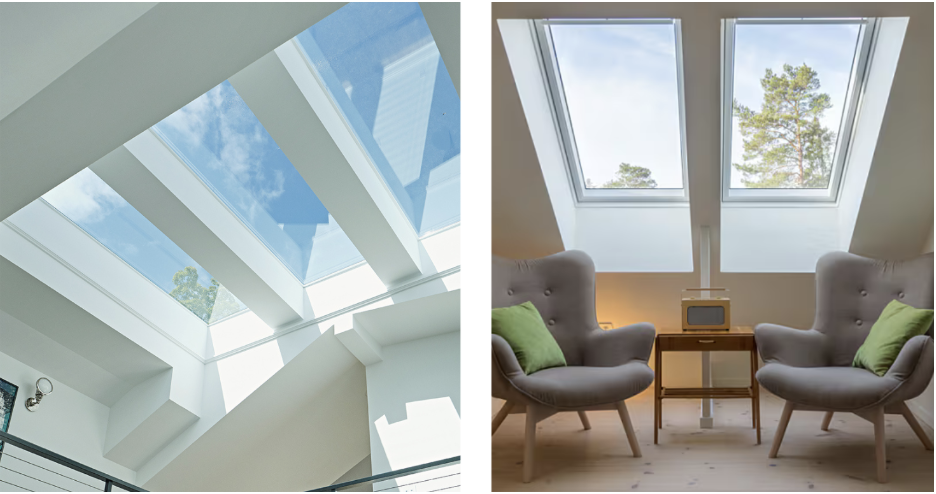
A skylight is a window installed in your roof or ceiling that brings natural light into your home from above. Modern skylights come in two main categories:
Fixed skylights are sealed units that don’t open. They’re designed purely to bring in natural light without providing ventilation.
Best for: Hallways, stairwells, living rooms, and any space where you want light but don’t need airflow
Vented skylights open to allow fresh air into your home. They can be operated manually with a hand crank or electrically with a remote control.
Best for: Kitchens, bathrooms, laundry rooms, or anywhere you want to vent heat, humidity, or cooking odors
At Hoel Roofing, we predominantly install Velux skylights because they offer the best combination of quality, durability, and modern features. Velux has been the industry leader for decades, and its products consistently outperform cheaper alternatives. That said, there are other brands on the market, and the right choice depends on your budget and goals.
Let’s start with why homeowners love skylights, and why we recommend them for the right situations.
This is the #1 reason people install skylights, and it’s easy to see why. A single 30″ x 46″ skylight provides over 37,000 lumens of natural light, equivalent to approximately 11 standard 100-watt light bulbs. That’s enough to completely transform a dark room.
An overhead light is better than wall windows because:
Bathrooms (especially interior bathrooms with no windows), kitchens, living rooms, home offices, hallways and stairwells, laundry rooms, and walk-in closets benefit the most from having the extra natural light.
Bottom line: Skylights can completely transform dark spaces while reducing your reliance on artificial lighting.
Natural light means less artificial lighting, which translates directly to lower electricity costs.
For example, if you have a room with four 60-watt light bulbs running 4 hours per day, that’s about $50 per year in electricity costs (at average U.S. rates). One skylight can eliminate or significantly reduce that need.
Modern Velux skylights come with Energy Star-rated glass, Low-E coatings, and argon gas fills that prevent heat loss in winter and heat gain in summer. This means your skylight isn’t just bringing in light, it’s actually helping insulate your home.
Bottom line: Skylights can help insulate your home and lower electricity costs.
If you choose a vented skylight, you get the added benefit of natural ventilation.
Here’s why that matters:
Hot air rises. In the summer, heat naturally accumulates near your ceiling. Opening a vented skylight lets that hot air escape, which can reduce your need for air conditioning and make rooms feel cooler without touching the thermostat.
This is especially valuable in:
Modern vented skylights can be:
Even better: Electric and solar-powered vented skylights come with rain sensors that automatically close the skylight when it starts raining, so you never have to worry about forgetting to close it.
Bottom line: Skylights can improve your home’s ventilation and cool your spaces.
Skylights aren’t perfect, and it’s important to know the potential drawbacks before you invest.
This is the most common complaint about skylights, and it’s valid, especially with older models.
Here’s the truth: On an older roof, the first thing that’s going to leak is usually the skylight. But this isn’t because skylights are inherently problematic. It’s because older skylights had poor flashing systems that didn’t properly divert water. Also, cheap skylights use inferior materials that degrade quickly.
Improper installation is the #1 cause of leaks.
Modern Velux skylights solve this problem by using an integrated flashing system specifically designed to shed water away from the skylight, not trap it. They also have corrosion-resistant materials and multiple layers of weatherproofing to prevent water intrusion.
Leaks are preventable with quality skylights and professional installation. Don’t let fear of leaks stop you; just make sure you choose the right product and the right installer.
Poorly chosen skylights can let in too much heat during the summer months, increasing cooling costs.
To avoid this:
In cold climates, condensation can form on the interior of skylights if they’re not properly insulated or ventilated.
How to prevent condensation:
Modern Velux skylights have a condensation resistance rating of 55 or higher, which means they’re engineered to minimize condensation even in cold weather.
Skylights cost anywhere between $2,000 to $4,000.
Most skylight complaints are leaks, condensation, and excessive heat. All of these are preventable with the right choices.
Budget brands cut corners on materials, flashing, and quality control. At Hoel Roofing, we exclusively install Velux skylights because they have:
Cheap skylights often fail within 10 to 15 years, costing you more in the long run when you have to replace them.
Poor installation is the #1 cause of leaks, voided warranties, premature failure, and condensation problems. When you hire a certified installer, your skylight is covered by a 10-year installation warranty, you’re guaranteed leak-free performance, and you get professional advice on placement and sizing.
Cold climates: Choose triple-pane glass or double-pane with Low-E coatings and argon fills
Skylights require minimal maintenance, but a little care goes a long way:
That’s it. With basic upkeep, your Velux skylight will last 20 to 30 years or more.
Do skylights always leak?
No. Older skylights had poor flashing systems, but modern Velux skylights are engineered to shed water and prevent leaks. When installed correctly by a certified installer, they should last 20 to 30 years leak-free.
Can I add skylights to any roof?
No, you can’t (or shouldn’t) add skylights to every roof, but most homes can accommodate them with the right approach. Asphalt shingle roofs are easiest and most common for skylights; metal roofs are possible but require specialized flashing and experienced installers, flat roofs can work, but need curb-mounted skylights and careful waterproofing, and tile or slate roofs are more complex and expensive due to fragility.
How long do Velux skylights last?
Velux skylights typically last 20 to 30 years or longer with proper installation and basic maintenance.
Can I install a skylight myself?
While DIY installation is possible, we strongly advise against it. Improper installation voids warranties, causes leaks, and leads to expensive repairs. Professional installation ensures your skylight performs as designed.
Will a skylight make my room too hot in summer?
Not if you choose the right skylight. Modern Velux skylights come with Low-E glass coatings that reflect solar heat while allowing visible light through. Solar-powered blinds (now standard on most models) give you additional control.
What’s better: fixed or vented skylights?
It depends on your needs. Fixed skylights are cheaper and simpler, great for pure natural light. Vented skylights cost more but provide ventilation, which is valuable in kitchens, bathrooms, and laundry rooms.
Do skylights increase home value?
Skylights don’t dramatically increase appraised value, but they make homes more attractive to buyers. Natural light is consistently ranked among the top features homebuyers want.
What’s the difference between a skylight and a Sun Tunnel?
Skylights are full windows made of glass. Sun Tunnels (also called tubular skylights) are small tubes that channel light through reflective interiors. Sun Tunnels are cheaper and work well for small spaces like closets or hallways.
For most homeowners, yes, skylights are absolutely worth it, especially if:
Skylights pay for themselves through energy savings, increased home value, and the sheer enjoyment of living in brighter, more comfortable spaces.
Skylights might NOT be worth it if:
The best way to know is to evaluate your home is to get an inspection.
At Hoel Roofing, we’re Velux-certified installers with a proven track record of successful skylight installations across Indiana. We help homeowners make the right decision, from helping you choose the right type and placement to final installation backed by a 10-year warranty.
Schedule a free inspection today. We will assess your home, discuss your goals, and show you exactly how a skylight can transform your space.

Toyosi Ogunsola is the Content Manager at Hoel Roofing & Remodeling in Rushville, IN, where she oversees the creation of educational, trustworthy content about roofing, remodeling, and home improvement. With a master’s degree in Emerging Media Design and Development and a background spanning content strategy, UX research, and digital marketing, Toyosi combines data-driven insights with clear, engaging writing to help homeowners make informed decisions. Passionate about translating complex roofing topics into helpful resources, she works closely with Hoel’s team of roofing experts to ensure every piece of content is accurate, practical, and user-focused.