Have you ever noticed water spilling over your gutters and thought, It can’t be that bad, I’ll deal with it later”? For many homeowners, damaged gutters may seem like a minor issue that can be put off, but it’s not always the best course of action. Ignoring bad gutters, especially where we’re located in Indiana, can lead to hidden costs like foundation damage, roof leaks, and siding repair expenses far higher than the cost of gutter maintenance or replacement.
At Hoel Roofing, we’ve spent the past 9 years helping Indiana families protect their homes from storm damage, leaks, and failing gutter systems. We know firsthand how small gutter issues quietly snowball into big repair bills.
Last year, we worked on a Muncie home where the owners had put off replacing sagging gutters. By the time they called us, water had already seeped into the basement, resulting in a $6,500 foundation repair, far more than the $2,800 gutter replacement they had initially been quoted. Cases like this are common, and they show how waiting almost always incurs additional costs in the end.
In this article, you’ll learn why gutters matter more than you think, how bad gutters damage your foundation, roof, and the actual hidden costs homeowners risk when gutters are ignored.
Many homeowners think of gutters as an optional add-on, but in reality, they’re part of your home’s first line of defense. Every drop of rain that falls on your roof has to go somewhere, and without working gutters to guide that water safely away, your home takes the hit.
Here’s what properly installed and maintained gutters actually do for you:
Gutters are not just for keeping rain off your head. They also keep your entire home, roof to foundation, safe, dry, and structurally sound.
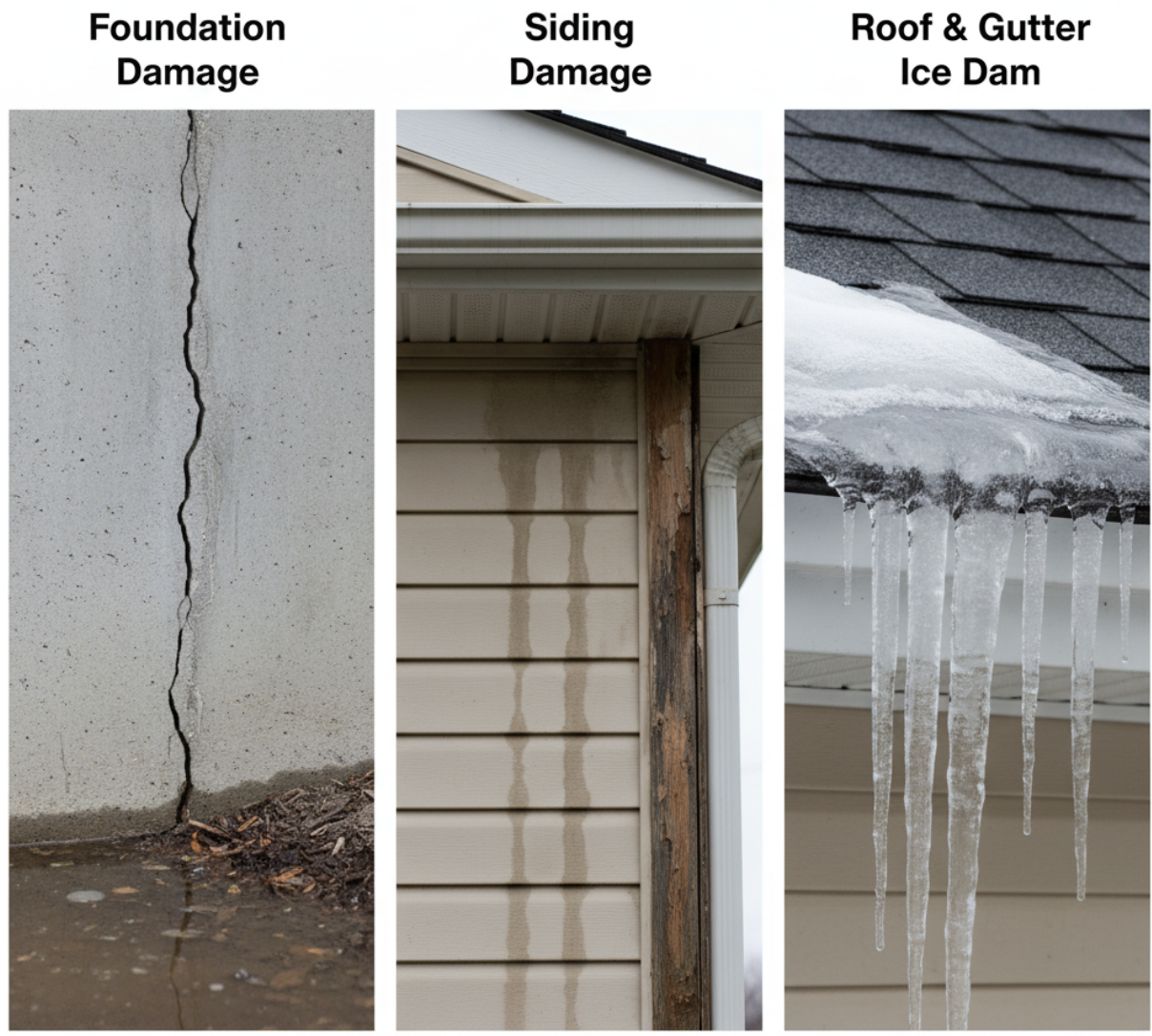
Think of your gutters like a steering system for rainwater. When they work, water flows safely away from your home. But when they’re clogged, cracked, or missing, that water has nowhere to go, so it soaks into the ground right next to your house.
Over time, that extra moisture starts to cause serious problems:
Cost check: Repairing foundation damage in Indiana can range from $4,000 to $10,000 (and sometimes more). By comparison, replacing bad gutters usually costs just a fraction of that (about $2,000), making it one of the smartest preventative fixes you can make.
Your siding doesn’t just help your home look better; it’s a protective shell for your home. When gutters fail, rainwater doesn’t get carried away properly. Instead, it splashes down the sides of your house.
If this happens once or twice, it may be acceptable; however, when it occurs repeatedly over time, the water stains and streaks can cause the paint to fade or peel more quickly, making your house appear older than it is.
Vinyl and wood siding can bend or buckle when they’re constantly wet, and for wood siding especially, the exposure to moisture can lead to rot, which spreads if left untreated.
Cost check: Replacing damaged siding in Indiana can cost anywhere from $8,000 to $40,000, depending on the size of your home. New gutters? $2,000 – $10,000.
It may surprise you, but clogged or broken gutters can even damage your roof. When water backs up because it can’t drain, it sits along the edges of your shingles. This creates a chain reaction:
For example, here in Indiana, our weather also contributes to the extent of damage your gutters can cause to your roof. Heavy spring rains can overwhelm clogged gutters in just one storm. Winter freeze-thaw cycles expand trapped water and worsen cracks, while ice dams force melting snow under shingles. Gutters that might limp along in milder climates often fail more quickly in Indiana due to our extreme weather conditions.
Cost check: A minor roof leak repair might be a few hundred dollars, say $750. However, if left unchecked, a full roof replacement can cost between $7,000 and $30,000 for asphalt shingles or between $9,000 and $38,000 for metal roofing in Indiana.
Think of all the effort you’ve put into your yard: the flowerbeds, mulch, grass, and maybe even hardscaping. Now imagine water pouring straight down from your roof every time it rains.
Without working gutters, you’ll see:
Cost check: Redoing landscaping can cost thousands, especially if erosion spreads to patios, walkways, or retaining walls. A new gutter system protects both your home and your curb appeal.
Bad gutters don’t just harm the outside of your house; they can raise your utility bills, too. Here’s how:
Cost check: Even a 10–20% increase in utility bills over a year can add up to hundreds of dollars in wasted expenses, all from water damage that could’ve been prevented.
Many homeowners don’t often realize it, but insurance companies don’t always cover water damage caused by poor maintenance. Sudden and accidental damage (such as a storm tearing gutters loose or ice dams forming unexpectedly) may be covered; however, gradual damage from neglected gutters (clogs, sagging, slow leaks) is typically excluded, as insurers consider it a maintenance issue.
And when it comes time to sell, home inspectors will notice water stains, foundation cracks, or siding damage, and buyers will either back out or demand costly repairs before closing.
Cost check: Water damage claims can cost insurers tens of thousands of dollars. If denied, that money comes straight out of your pocket. Plus, visible gutter damage can lower your home’s resale value by 5-10%.
Yes, your gutters can cause pest and insect problems. This is because standing water is like a welcome mat for pests.
Beyond damage to your home, pests carry diseases and create unsanitary conditions. Preventing standing water with healthy gutters is the easiest way to avoid this headache.
Can clogged gutters lead to damage on the inside of my home?
Yes, and it often happens faster than homeowners expect. Once water sneaks past the exterior, the inside of your home becomes the next target. In Indiana, we often see ceiling stains and attic insulation damage within a single season of neglected gutters. Over time, water intrusion leads to:
These aren’t just cosmetic issues. They affect your family’s health, your home’s energy efficiency, and your ability to sell the house without expensive remediation.
How often do clogs mean it’s time for replacement?
Clogging by itself doesn’t always mean your gutters are bad; it often depends on your environment. If trees surround your home, your gutters will fill up faster, regardless of their age. That leaves you with three real choices: clean them yourself multiple times per year, pay someone else to clean them, or install gutter guards to keep debris out.
Will my homeowners’ insurance cover gutter-related water damage?
Not always. If damage is due to neglect or poor maintenance, your insurer may deny the claim. Keeping gutters clean and in good working condition is crucial to staying protected.
How long do gutters typically last?
Aluminum gutters last about 20 years with proper care. Copper can last 50 years or more, but regular inspections and cleaning are essential for any material.
A big reason gutters are often ignored is that homeowners assume fixing them will be too expensive. In reality, prevention almost always costs less than repairs:
And to be clear, this isn’t about selling you gutter services. Most of the common fixes (like adding extensions or redirecting downspouts) are inexpensive, simple, and many homeowners even handle them on their own. Our goal is just to help you avoid the far more costly issues we see in Indiana homes every year.
Ignoring failing gutters, on the other hand, can lead to:
The longer you wait, the more expensive the repair will be. If you’re unsure if your gutter can be repaired, read our article 7 Signs Your Gutters Are Beyond Repair (And Costing You Thousands) to tell if it can be repaired or if you need a full replacement.
If your gutters are sagging, overflowing, or clogging too often, schedule a free gutter inspection with Hoel Roofing. We’ll let you know if your system needs repair, guards, or full replacement, and you’ll have the facts to make the best decision for your home.

Toyosi Ogunsola is the Content Manager at Hoel Roofing & Remodeling in Rushville, IN, where she oversees the creation of educational, trustworthy content about roofing, remodeling, and home improvement. With a master’s degree in Emerging Media Design and Development and a background spanning content strategy, UX research, and digital marketing, Toyosi combines data-driven insights with clear, engaging writing to help homeowners make informed decisions. Passionate about translating complex roofing topics into helpful resources, she works closely with Hoel’s team of roofing experts to ensure every piece of content is accurate, practical, and user-focused.