Why Are My Roof Shingles Falling Off? Top Causes, Fixes & Repair Costs

Are your shingles falling off, blowing away, or showing up in your yard after a storm? If so, keep reading.

Shingles falling off usually means one thing: your roof has lost its ability to stay sealed, nailed, or properly ventilated. Sometimes it’s a simple repair. Other times, it’s an early warning of much more serious damage.

At Hoel Roofing, we’ve been trusted with thousands of roofing inspections, repairs, and replacements in the Indiana area for a decade. In that time, we have seen everything from a single loose shingle to entire sections peeling back like the pages of a book. We have seen immediate solutions and the damage that can result from neglecting just a few shingles.

In this article, we discuss what the most common causes of shingles falling or blowing off are, if missing a few shingles is a big deal, what happens if you ignore missing shingles, and how to prevent shingles from falling off in the future.

By the end of this article, you will understand the problem, what it means for your home, and what to do next.
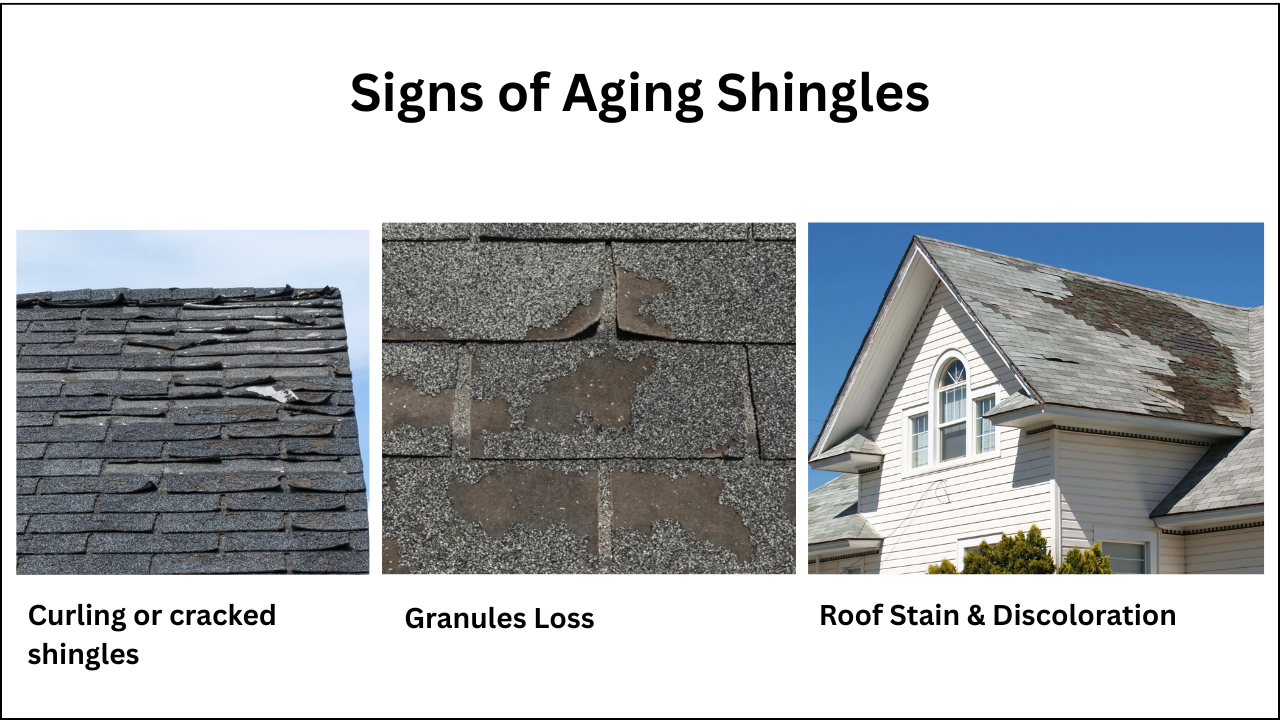
Collage showing signs of aging shingles: curling shingles, missing granules, and roof stains. Text labels each issue to highlight damage.

What Are the Most Common Causes of Shingles Falling or Blowing Off?

1. Storm Damage

Indiana storms can pull shingles loose even if your roof is in decent shape. High winds (40 mph or greater, and/or wind gusts of 58 mph or higher) can lift shingles, breaking the seal and snapping nails. Hail can also weaken the exterior surface of shingles, making it easier for wind to remove it later.

If you have storm damage, you’ll likely see it because of:

  • Shingles missing in clean, straight lines.
  • Granules piled in gutters.
  • Shingles that are still on your roof, but appear to be creased or bent.

2. Nail Pops

A nail pop happens when the nails that hold shingles in place work their way out of the decking (or wooden base). As the nail pushes away from the decking, the shingle loosens and eventually blows off.

Why nail pops happen:

  • Expansion and contraction of the roof deck
  • Poor-quality nails
  • Moisture in the decking causing wood movement

Usually, roofers remove the popped nail, install a new fastener in the correct location, and properly reseal the shingle.

3. Poor Installation

Even brand-new roofs can shed shingles if the installation was rushed or sloppy.

Common installation mistakes include:

  • Shingles nailed too high (“high-nailing”)
  • Incorrect number of nails
  • Nails driven at an angle
  • Bad sealing pattern
  • Flashing improperly installed

Poor workmanship is one of the top reasons shingles blow off years earlier than they should.

4. Aging Shingles

Shingles naturally weaken as they age. After 15–25 years, the asphalt dries out, granules fall away, and the material becomes brittle.

Signs your shingles are aging:

  • Curling edges
  • Granule loss
  • Cracks or splits
  • Dull, worn-down appearance

Older shingles can detach even in mild wind because they’ve lost flexibility and adhesion.

5. Improper Attic Ventilation

Your attic must release heat and moisture efficiently. When it doesn’t, shingles overheat from below or absorb excess moisture, causing them to deteriorate and loosen.

Poor ventilation leads to:

  • Warped decking (when deck boards lose their flat shape due to uneven shrinkage and expansion, and become bowed, cupped, or twisted).
  • Loose nails
  • Brittle, overheated shingles
  • Faster roof aging

Ventilation isn’t a visible problem, but it’s one of the biggest causes of recurring shingle loss.

How Weather in Indiana Specifically Causes Shingles to Fall Off

Indiana’s climate puts roofs through stress cycles that many homeowners don’t realize are happening. Even a roof that “looks fine” from the ground can be dealing with months of slow, hidden damage. Here’s how our weather directly causes shingles to loosen, lift, or blow off.

  • Lake-Effect Wind Bursts (Sudden, Strong Gusts): Even though Indiana isn’t right next to the Great Lakes, we still feel the impact of lake-effect wind systems, especially in northern and central counties. These winds come in short, powerful bursts and can lift shingles from the bottom edge and break the bond between shingles and the roof deck. Once a single shingle corner lifts, the next storm can rip it off completely.
  • Freeze–Thaw Expansion Under Shingles: From late fall through early spring, Indiana experiences constant freezing and defrosting cycles. The expansion that occurs during freezing can push shingles upward or loosen nails. When temperatures rise again, the now-loosened shingle becomes vulnerable to wind. This daily cycle can quietly loosen multiple shingles over just one winter.
  • Winter Ice Dams Prying Shingles Upward: Ice dams (a ridge of ice that forms at the edge of a roof, blocking melting snow from draining, causing water to back up and seep under shingles) form when melting snow refreezes at the roof edge. This creates a ridge of ice that blocks proper drainage. This water pools behind the dam and creeps under shingles. This trapped water freezes and expands, lifting the shingles and causing the nails to pull out. Wind finishes the job by tearing off the loosened shingles.

Is Losing a Few Shingles a Big Deal? When Should You Actually Worry?

Yes, even one shingle missing can be serious. Every missing shingle exposes the layer below it to wind and water. Indiana’s freeze-thaw cycles make this worse because tiny leaks can turn into major damage within months.

When to worry:

  • You find shingles on the ground after multiple storms
  • You see exposed nails or bare spots on the roof
  • Shingles start lifting, curling, or flapping
  • You notice stains on ceilings or walls
  • More than one section keeps losing shingles

If the loss is widespread, your roof may be nearing the end of its lifespan.

What Happens If You Ignore Missing Shingles? Short-Term vs. Long-Term Damage

A few missing shingles might look like a minor cosmetic issue, but they expose some of the most vulnerable layers of your roof to Indiana’s harsh weather. Here’s what really happens when those gaps stay unrepaired:

Short-Term Damage (Weeks to a Few Months)

Even in the early stages, missing shingles start a chain reaction you can’t see from the ground.

  • Water Reaches the Underlayment: The shingle above the exposed area can no longer shed rain properly. Water begins to reach the underlayment, which is only meant as a backup barrier.
    • Result: early moisture absorption and slow deterioration.
  • Nail Holes Become Water Entry Points: Shingles are held down by nails. When a shingle blows off, those nail holes become tiny water funnels.
    • Result: small leaks begin forming under the surface.
  • Wind Lifts Surrounding Shingles: Once one shingle is missing, the surrounding ones lose their wind protection.
    • Result: each storm makes the damage patch grow.
  • UV Exposure Weakens the Roof Deck: Sunlight dries and cracks the exposed underlayment more quickly than usual.
    • Result: it becomes brittle, shortening your roof’s lifespan.

Even if you don’t see dripping indoors, the roof is already degrading.

Long-Term Damage (6 Months to Several Years)

This is where the costs climb rapidly, and where many homeowners finally discover the damage long after it’s spread.

    • Leaks Form Inside the Home: Moisture eventually penetrates the roof deck and reaches the attic.
      • Result: visible water stains, humidity spikes, and mold growth.
    • Roof Deck Rot: Consistent moisture causes the wooden decking beneath the shingles to rot.
      • Result: structural weakness that requires full replacement, not just repairs.
  • Mold in Attic Insulation: Wet insulation holds moisture for long periods.
  • Result: dangerous mold growth and drastically reduced energy efficiency.
  • Sagging Rooflines: Rotting decking and moisture-weakened rafters can begin to sag.
  • Result: costly structural repairs, often $5,000–$15,000+.
  • Ice Dams Become More Severe in Winter: Once the roof underlayment is compromised, winter ice dams worsen the damage.
  • Result: water pushes under shingles even when temperatures fluctuate.
  • Insurance Denial for Neglect: Most insurance policies classify ignored roofing issues as homeowner neglect.
  • Result: policy may deny coverage for repairs or full replacement.
  • Full Roof Replacement Becomes Inevitable: By the time multiple layers are damaged, including shingles, underlayment, and decking, repairing individual sections no longer makes sense.
  • Result: what started as a $250–$600 repair turns into an $8,000–$15,000+ roof replacement.

How to Prevent Shingles from Falling Off in the Future

You can significantly extend your roof’s life with a few simple steps:

  • Schedule annual roof inspections, especially after severe Indiana storms.
  • Keep gutters clean to prevent water from backing up under shingles.
  • Fix nail pops early before the wind gets underneath the shingle.
  • Maintain proper attic ventilation and insulation.
  • Trim overhanging branches that can tear shingles during storms.
  • Choose a certified installer when replacing your roof; workmanship matters.

Prevention is always cheaper than repair.

FAQs About Missing or Loose Shingles

Can I replace one missing shingle myself?
You technically can, but incorrect nailing or sealing often causes more problems later.

Will my roof leak if one shingle falls off?
Not immediately, but eventually, yes. Water always finds openings.

Why do my shingles blow off only in one section?
That usually indicates an installation error or ventilation issue in that area.

Does insurance cover the replacement of missing shingles?
Yes, if they were lost due to storm damage. Insurance typically covers wind and hail damage, as well as damage from trees or debris hitting the roof. Insurance does not cover shingles falling off due to age, poor installation, or previous unaddressed maintenance issues. If a storm caused your shingles to blow off, filing a claim may reduce your total out-of-pocket costs significantly.

Are architectural shingles less likely to fall off than 3-tab shingles?
Yes. Architectural shingles are heavier and more wind-resistant.

Should I wait until spring to fix missing shingles?
No. Winter weather can turn a small problem into major damage.

Should You Repair or Replace Your Shingles?

Here’s the rule of thumb:

  • If the damage is isolated to one small area, repair is usually fine.
  • If multiple sections keep failing, replacement becomes more cost-effective.
  • If your roof is 15+ years old, missing shingles are often a sign it’s time to plan for full replacement, not repeated repairs.
  • If the wood beneath the shingles (the decking) feels soft, saggy, or spongy, repairs alone won’t help. Damaged decking needs a structural fix + new shingles.
  • If you’ve had recurring leaks, repeated shingle repairs, or storm patches over the years, the roof has likely hit its limit.

If you are unsure if you can delay your roof repair, check out our article Do You Really Need a Roof Repair Right Now?

If you notice these signs but don’t feel comfortable inspecting further, that’s what a professional roof inspection is for. At Hoel Roofing, we offer free, professional roof inspections that give you peace of mind, clear documentation, and expert guidance,  all without spending a dime. These inspections also come with free estimates. Schedule your free roof inspection today, and let’s partner with you to protect your Indiana home from costly roof problems before they start.

Toyosi Ogunsola

Toyosi Ogunsola is the Content Manager at Hoel Roofing & Remodeling in Rushville, IN, where she oversees the creation of educational, trustworthy content about roofing, remodeling, and home improvement. With a master’s degree in Emerging Media Design and Development and a background spanning content strategy, UX research, and digital marketing, Toyosi combines data-driven insights with clear, engaging writing to help homeowners make informed decisions. Passionate about translating complex roofing topics into helpful resources, she works closely with Hoel’s team of roofing experts to ensure every piece of content is accurate, practical, and user-focused.

Would you like to share?