You wake up after a winter storm to find shingles in your yard, ice dams forming on your roof, or water dripping through your ceiling. Your first thought: “Will my insurance cover this?” Your second thought: “What should I do right now?”
These are critical questions, and the answers aren’t always straightforward. Insurance companies cover “sudden and accidental” damage (unpredictable events) but not “gradual and expected” damage (normal aging). Whether your homeowners’ insurance covers winter roof damage depends on what caused it, how quickly you act, and what you do first.
At Hoel Roofing & Remodeling, we’ve helped hundreds of Indiana homeowners navigate insurance claims for winter roof damage over the past eight years. We’ve seen claims approved and denied, and we know exactly what makes the difference. We work directly with insurance adjusters to document damage properly and help homeowners get the coverage they deserve.
In this article, we’ll explain which types of winter roof damage insurance typically covers, what’s usually excluded, and most importantly, the exact steps you should take right now to protect both your home and your insurance claim.
By the end, you’ll know exactly what to do first when winter damages your roof, and how to maximize your chances of getting insurance to pay for repairs.
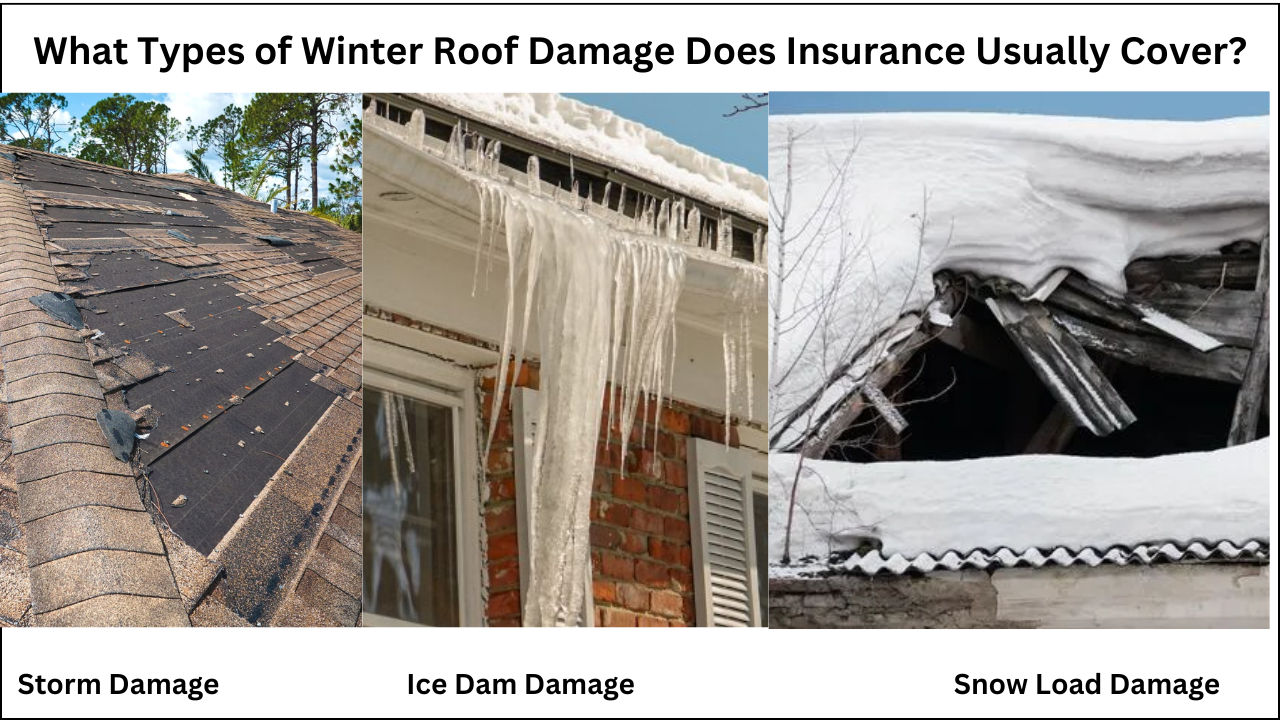
Insurance companies cover “sudden and accidental” damage (unpredictable events) but not “gradual and expected” damage (normal aging). Here’s what typically gets approved:
Wind-blown shingles, fallen tree branches during storms, hail damage (cracked shingles, dented metal), and wind-driven rain under damaged shingles. Be sure to file claims quickly after storms because timely reporting is critical to getting covered.
It’s important to note that many Indiana policies have separate wind/hail deductibles. These deductibles are often 1-2% of home value, which is typically higher than your standard deductible. For example, a $250,000 home with 1% wind/hail deductible = $2,500 out-of-pocket (not your standard $1,000 deductible).
Why it’s covered: Sudden, unpredictable weather events.
Water leaks from ice dams, interior ceiling/wall damage, and gutters pulled down by ice weight. Insurance covers resulting damage (leaks, interior harm) but may not cover ice dam removal itself or fixing underlying ventilation problems.
Why it’s covered: Ice dams form suddenly due to weather, not gradual neglect.
Roof collapse or structural damage from excessive snow, damaged rafters/decking, and broken gutters from snow buildup.
Why it’s covered: Excessive snow is beyond your control.
Shingles cracked by rapid temperature changes, flashing pulled loose by ice expansion, and vents damaged by freezing cycles.
Why it’s sometimes covered: If it happens suddenly during a specific weather event rather than a gradual deterioration.
Indiana Code § 27-4-1-4.5 requires insurers to respond promptly, provide reasonable denial explanations, and not misrepresent policy provisions. If your insurer delays or provides vague denials, it may be violating Indiana law. Complaints are filed with the Indiana Department of Insurance: (317) 232-2395 or in.gov/idoi
Understanding exclusions helps you avoid filing claims that will be denied:
Gradual aging damage like shingles losing granules (15+ years old), curled edges from years of exposure, or worn weather stripping.
Why: Insurance covers unexpected damage, not the routine replacement of old materials.
Problems from poor upkeep: ignored small leaks that became major damage, clogged gutters causing ice dams, unreplaced missing shingles allowing water intrusion, or mold from long-term moisture.
Why: Policies require proper maintenance. Document all repairs to prove you weren’t negligent.
Old unrepaired wind damage, previous unfixed leaks, or structural issues from years of water intrusion.
Why: Insurance doesn’t fix old problems. Get regular roof inspections documenting your roof’s condition.
Damage from poor workmanship: incorrectly installed shingles that blow off in normal winds, wrong flashing causing leaks, or cheap repairs that fail quickly.
Why: This is a contractor quality issue, not insurance. Hire reputable contractors and keep warranty documentation.
The order of your actions matters tremendously:
Step 1: Prevent Further Damage (Immediately)
Place buckets under leaks, move valuables away from wet areas, cover damaged areas with tarps (or hire emergency service), and turn off electricity in affected areas if water is present.
Why: Insurance requires you to prevent further damage. Document these actions with photos.
Step 2: Call a Roofer BEFORE Calling Insurance
Roofers assess the full damage scope (adjusters may minimize it), tell you if the damage is worth filing a claim, explain if it’s typically covered, and provide professional documentation before insurance tries to downplay it.
Learn more about why you should call a roofer before your insurance.
Step 3: Document Everything
Photograph the overall roof, close-ups of damage, interior damage, and fallen debris. Record date/time of damage, actions taken, and weather conditions.
Step 4: Contact Your Insurance Company
Report the date and cause of damage (e.g., “Winter storm on January 15”). Mention you’ve taken steps to prevent further damage and had a professional inspection. Don’t say anything suggesting neglect or pre-existing damage.
Step 5: Meet with the Insurance Adjuster
Have your roofer present during the inspection. They can point out damage adjusters might miss and advocate for proper repairs.
Step 6: Review the Settlement Carefully
Check if it covers all damage your roofer identified, has realistic repair costs, includes hidden damage (decking, underlayment), and whether it’s RCV or ACV. If too low, your roofer can help dispute it.
Does insurance cover ice dam removal?
Usually not. Insurance typically covers the damage caused by ice dams (water leaks, interior damage) but not the cost of removing the ice dam itself or fixing underlying ventilation issues that caused it. However, some policies include emergency mitigation coverage, so check your specific policy.
Is snow damage to my roof covered by homeowners insurance?
In most cases, yes. Homeowners insurance typically covers roof damage caused by the weight of snow or ice, as long as the damage is sudden and accidental, not the result of neglect or poor maintenance.
Coverage usually applies to collapsed roof sections from heavy snow, leaks caused by ice dams, and interior water damage resulting from snow or ice buildup. However, coverage depends on your specific policy and whether the roof was properly maintained.
Are ice dams covered by insurance?
Often, yes, but with conditions. Most standard homeowners insurance policies cover water damage caused by ice dams, including: ceiling and wall water damage, damaged insulation, and mold remediation (up to policy limits)
What winter roof damage is NOT covered by insurance?
Most policies will not cover damage caused by poor maintenance, pre-existing leaks or rot, improper installation, gradual wear and tear, and ice dams caused by known insulation or ventilation problems that were never addressed
It depends on what it costs to fix the roof damage. The general rule is that claims under $2,000 are often better to pay yourself to avoid insurance complications. Some additional factors to consider are:
We explain when it is better to use homeowners’ insurance for your roof replacements, and when it’s better to pay out of pocket, in our article Should You Use Homeowners Insurance for a Roof Replacement?
At Hoel Roofing & Remodeling, we work with insurance companies daily. We know how to document damage properly, what adjusters look for, and how to help homeowners get fair settlements. If you’ve discovered winter damage to your roof, don’t call insurance; first call us.
We’ll inspect your roof, document all damage, provide a detailed estimate, and guide you through the entire claims process. We can even be present during the adjuster’s inspection to advocate for proper repairs.
Call us at (765) 561-4023 or request a free inspection today. We serve homeowners throughout Rushville, Columbus, and surrounding Indiana communities with insurance claim assistance.
Don’t let insurance companies minimize your claim; let us help you get the coverage you deserve.

Toyosi Ogunsola is the Content Manager at Hoel Roofing & Remodeling in Rushville, IN, where she oversees the creation of educational, trustworthy content about roofing, remodeling, and home improvement. With a master’s degree in Emerging Media Design and Development and a background spanning content strategy, UX research, and digital marketing, Toyosi combines data-driven insights with clear, engaging writing to help homeowners make informed decisions. Passionate about translating complex roofing topics into helpful resources, she works closely with Hoel’s team of roofing experts to ensure every piece of content is accurate, practical, and user-focused.