You notice icicles hanging from your gutters; they look pretty, almost like winter decorations. But a few days later, you spot water stains on your ceiling or water dripping down your walls. What’s happening? You might have an ice dam, and it’s causing serious damage to your home.
Ice dams are among the most common and damaging winter roofing problems we see across central Indiana. At Hoel Roofing & Remodeling, we’ve helped hundreds of homeowners in Rushville, Columbus, and surrounding areas address ice dam damage over the past decade. We’ve seen the destruction they cause when ignored, and we know exactly how to prevent them.
In this article, we’ll explain what ice dams are in plain language, how they damage your roof and home, the warning signs to watch for, and most importantly, what you can do to stop them before they cause expensive damage.
By the end, you’ll understand exactly why ice dams form on Indiana roofs and how to protect your home before a small problem becomes a major repair bill.
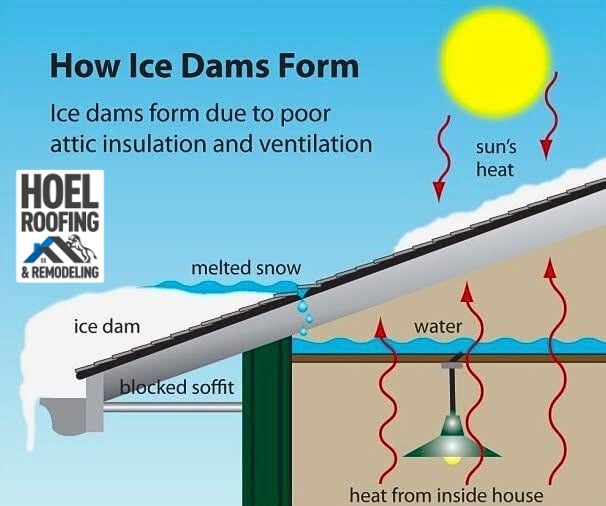
An ice dam is a thick ridge of ice that forms along the edge of your roof. It acts like a wall that traps melting snow on your roof, preventing water from draining off properly.
Here’s how it forms:
Think of it like a bathtub with a blocked drain; the water has nowhere to go, so it overflows. On your roof, that “overflow” seeps under your shingles and into your house.
The middle of your roof is warmed by heat escaping from inside your home. But the overhang (the part that sticks out past your walls) doesn’t have any heated space underneath it, so it stays cold. When melting snow reaches this cold edge, it freezes solid.
As more snow melts and flows down, it hits the ice dam and has nowhere to go. The water pools deeper and deeper behind the ice. Eventually, it finds its way under your shingles, through tiny gaps, and into your home.

Ice dams cause real, expensive damage in multiple ways:
When water backs up behind the ice dam, it works its way under your shingles and:
Typical repair cost: $1,500 to $5,000, depending on the extent of damage.
The weight and presence of ice damages your roof itself:
Typical repair cost: $500-$1,500 for minor damage; $3,000-$8,000 for major damage requiring deck replacement.
Ice dams are incredibly heavy; a foot-long section can weigh 50+ pounds, causing:
Typical repair cost: $2,400-$2,800 for complete replacement.
Moisture inside your walls and attic creates perfect conditions for mold, which:
The total cost of ice dam damage often reaches $5,000-$10,000 when you add up all repairs. This is why prevention is so important.

If you’re trying to check to see if you have ice dams, here’s what to look for:
While small icicles are normal. We’re talking about thick, heavy icicles and visible ridges of ice
Important thing to note: Small icicles are normal. We’re talking about thick, heavy icicles and visible ridges of ice.
Some other external indicators are:
If you notice any of these signs, check your attic immediately for active leaks. The sooner you catch ice dam damage, the less expensive the repairs will be.
Understanding why ice dams form helps you prevent them. Here are the main causes:
Insulation is the material (usually pink fiberglass or blown-in cellulose) in your attic that prevents heat from escaping your home.
Why it matters: When your attic doesn’t have enough insulation, heat from your living spaces rises through your ceiling and warms your roof. This melts the snow on top, starting the ice dam cycle.
What you need: Indiana homes need at least R-38 insulation in the attic (that’s about 12-14 inches of blown-in insulation).
Your attic needs airflow; cold air comes in through soffit vents (vents under your roof overhang) and warm air exits through ridge vents (vents along the peak of your roof).
Why it matters: Without proper ventilation, warm air gets trapped in your attic, heating your roof and melting snow.
What you need: A balanced system with intake vents (soffits) and exhaust vents (ridge or gable vents) that allow air to flow through.
Gaps around pipes, wiring, chimneys, recessed lights, and attic hatches let warm air escape directly into your attic.
Why it matters: Even small air leaks can warm your roof enough to melt snow. Common leak spots include: recessed ceiling lights, bathroom exhaust fans, attic access door, plumbing vent pipes, and chimney penetrations
Leaves, sticks, and debris block water flow in gutters and often clog them.
Why it matters: When gutters can’t drain melting snow, water backs up and refreezes, contributing to ice dam formation. Learn more about how gutter problems can cause roof damage.
Indiana’s winter weather creates ideal ice dam conditions:
You can’t control the weather, but you can control your roof’s temperature through proper insulation and ventilation.
If you’ve discovered an ice dam and water is leaking into your home, here’s what to do:
Most homeowners’ insurance policies cover ice dam damage. Call your insurance provider to:
Don’t try to chip ice off yourself:
Don’t use salt or harsh chemicals:
Don’t ignore it and hope it melts:
Are icicles always a sign of ice dams?
No, small icicles by themselves are normal in winter. Large icicles often signal heat loss from the attic, which increases the risk of ice dam formation.
Can ice dams cause damage even if I don’t see leaks yet?
Yes. Ice dams can cause hidden damage long before water appears inside your home. Water can soak into insulation, rot roof decking, and weaken shingles before it ever reaches your ceiling. By the time stains appear, damage has often been happening for weeks.
Will my homeowner’s insurance cover ice dam damage?
In most cases, yes, insurance typically covers damage caused by ice dams. However, coverage depends on your specific policy and whether the damage is considered sudden and accidental.
Do gutter guards prevent ice dams?
Gutter guards help with debris, but they do NOT prevent ice dams on their own. Ice dams are primarily caused by heat loss, poor insulation, and ventilation problems.
Is it safe to remove ice dams myself?
No, DIY ice dam removal is dangerous and often causes more damage.
How fast can ice dam damage happen?
Damage can begin within 24-48 hours once water backs up behind an ice dam.
Moisture spreads quickly into insulation and drywall, and mold growth can begin in as little as two days.
Yes, you can. Here’s how:
A professional roof inspection can help identify heat-loss areas, ventilation issues, insulation gaps, and potential weak spots.
Don’t wait for water stains to appear. Call us at (765) 561-4023 or request a free inspection to identify ice dam risks before they become expensive problems. We serve homeowners throughout Rushville, Columbus, and surrounding Indiana communities.

Toyosi Ogunsola is the Content Manager at Hoel Roofing & Remodeling in Rushville, IN, where she oversees the creation of educational, trustworthy content about roofing, remodeling, and home improvement. With a master’s degree in Emerging Media Design and Development and a background spanning content strategy, UX research, and digital marketing, Toyosi combines data-driven insights with clear, engaging writing to help homeowners make informed decisions. Passionate about translating complex roofing topics into helpful resources, she works closely with Hoel’s team of roofing experts to ensure every piece of content is accurate, practical, and user-focused.