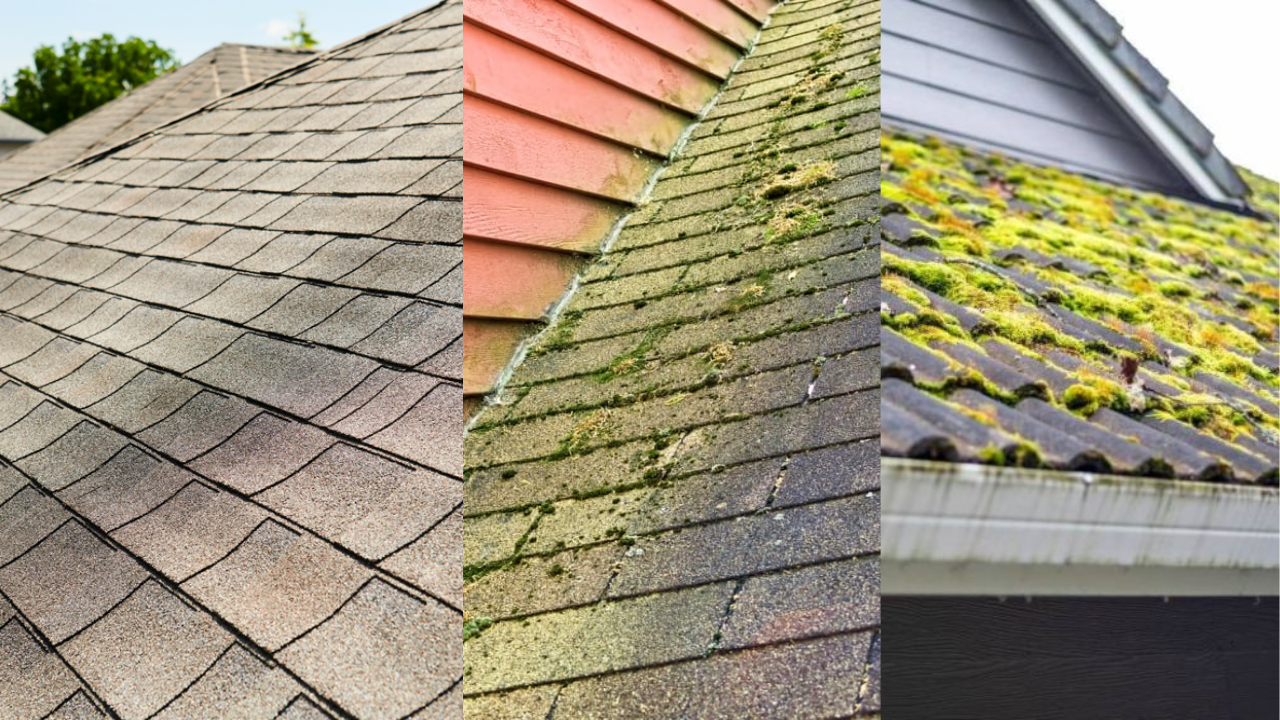
Have you noticed dark streaks that aren’t dirt or stains running down your roof? Have you noticed dark streaks running down your roof that don’t look like dirt?
And are you wondering if it’s just cosmetic, or a sign your roof is starting to fail?
The reality is, roof algae is more than just an eyesore. Left untreated, it can shorten your roof’s lifespan by years, lead to leaks, and cost you thousands in repairs or early replacement.
Algae on your roof is bad for both your wallet and your home’s lifespan. While it starts as a cosmetic problem with black or green streaks, algae holds moisture against your shingles, which can lead to premature deterioration, leaks, and a significantly shortened roof lifespan.
At Hoel Roofing, we see algae-covered roofs every day across Indiana. In fact, when we inspect homes in the field, one of the first things we look for is algae, because it tells us a lot about the roof’s health and how much longer it will last.
This article explains what algae really does to your roof, why some roofs get covered faster than others, how to prevent it, and what to do if you already have it.
By the end, you’ll know exactly how serious algae is for your roof and what steps to take to protect your investment.
Yes, and the damage is more serious than most homeowners realize. Here’s what algae does to your shingles over time, and why it’s not just a cosmetic issue.
This is the #1 way algae damages roofs. Algae acts like a sponge, trapping moisture against the surface of your shingles. In normal conditions, shingles are designed to shed water quickly. But when algae is present, moisture sits on the shingle surface for extended periods.
What happens when moisture stays trapped:
We recently inspected a roof that was only 7 years old and already extremely covered in algae. The homeowners were experiencing leaks on a roof that should have easily lasted 20+ years.
Algae doesn’t just sit on your roof; it actively feeds on it. The algae eat the limestone filler in asphalt shingles. As algae consumes these minerals, it breaks down the shingle structure from the outside in.
The result:
Once algae has eaten away at your shingles, the damage is irreversible. You can clean the algae off, but the structural damage remains.
A quality asphalt shingle roof should last 20 to 30 years. But algae can significantly shorten that lifespan.
How much time does algae cost you?
Heavy algae growth can reduce your roof’s lifespan by 5 to 10 years or more, depending on:
Catching algae early before it causes extensive damage can save you thousands in premature roof replacement costs.
When algae holds moisture against shingles long enough, that moisture finds its way through. This causes leaks through:
Even if algae hasn’t caused leaks yet, it makes your home look neglected.
Impact on resale value:
A roof covered in algae can cost you thousands in lost home value, even if the roof is structurally sound underneath.
Not all roofs develop algae at the same rate. Algae growth isn’t random; a few key environmental and material factors drive it. Here’s why some roofs stay clean while others get covered in just a few years.
Trees and shade are the #1 factor. This is because shaded roofs:
North-facing roof slopes are especially vulnerable because they receive less direct sunlight and dry more slowly.
Algae loves warm, humid conditions. If you live in an area with:
…your roof is at higher risk for algae growth. Indiana’s climate creates ideal conditions for algae, which is why we see it so frequently on roofs across the state.
Older shingles are more susceptible. As shingles age:
Newer algae-resistant shingles contain copper granules that inhibit algae growth. Older shingles don’t have this protection.
Algae spreads from roof to roof.
If your neighbors have algae-covered roofs, airborne spores will eventually land on yours. This is why entire neighborhoods often develop algae problems around the same time.
Prevention is always better and cheaper than dealing with algae after it’s taken hold.
Modern algae-resistant shingles contain copper granules mixed into the surface. When it rains, copper ions are released and wash down the roof, creating an environment where algae can’t survive. Copper works because it is naturally toxic to algae, moss, and lichen. Even trace amounts prevent growth.
Popular algae-resistant shingle brands are:
Cost difference: Algae-resistant shingles typically cost $50 to $150 more per square than standard shingles. For a typical roof, that’s $500 to $1,500 extra, a small price compared to premature roof replacement.
At Hoel Roofing, we recommend algae-resistant shingles for every roof replacement in Indiana because they pay for themselves by extending roof lifespan and preventing costly cleaning or early replacement.
Reduce shade and debris. Trees create the perfect environment for algae since their:
Consider trimming branches that hang over or near your roof. Aim for at least 6-10 feet of clearance.
Clogged gutters create edge moisture. When gutters overflow, water backs up onto the roof edge, creating a damp environment where algae thrives.
Clean your gutters at least twice a year, and more often if you have trees nearby.
Better airflow = faster drying. Proper attic ventilation helps moisture escape, reducing the damp conditions that algae needs to grow.
If your roof has poor ventilation, there will be:
Catch algae early before it causes damage. A professional roof inspection can identify early algae growth and other issues before they become expensive problems.
At Hoel Roofing, we recommend annual inspections to monitor roof health, especially if your roof is over 10 years old or you’ve noticed algae in the past.
If algae is already growing on your roof, here’s what you need to know about removal.
Professional roofers use soft-washing techniques that:
Professionals can also help:
At Hoel Roofing, we assess whether cleaning makes sense or if replacement is the better investment. On a roof that’s already 15+ years old with heavy algae, replacement often saves money in the long run.
This is the most common method. Mix a 50/50 solution of chlorine bleach and water, apply it to the algae-stained areas, let it sit for 15 to 20 minutes, then rinse with clean water.
The problem with this method, however, is that:
It is advisable to consider these risks before trying this method.
Never pressure wash your roof. This is critical because pressure washing causes:
Pressure washing can do more damage than the algae itself.
Can I prevent algae with roof coatings?
Some roof coatings claim algae resistance, but they’re not as effective as copper-infused shingles. Coatings also require reapplication every few years.
Should I replace my roof if it has algae?
It depends. If your roof is under 10 years old and the algae is light, cleaning may be sufficient. If your roof is 15+ years old, has heavy algae growth, and leaks, replacing it with algae-resistant shingles is the smarter investment.
How long does it take for algae to damage a roof?
It depends on severity. Light algae may take 5 to 10 years to cause significant damage. Heavy algae (like the 7-year-old roof Chris inspected) can cause leaks in just a few years.
Will cleaning algae off my roof damage the shingles?
It can if done incorrectly. Pressure washing damages shingles. Soft washing with appropriate solutions (performed by professionals) is safe. DIY bleach cleaning can work, but it has risks.
Do copper or zinc strips really prevent algae?
Yes, but with limitations. Copper and zinc strips release ions that inhibit algal growth, but they protect only the first 5 to 10 feet below the strip. For full roof protection, you’d need multiple strips, making algae-resistant shingles more cost-effective.
Why doesn’t algae grow near my roof vents or chimney?
Metal flashing around vents and chimneys releases small amounts of metal ions when rainwater runs over them. These ions prevent algae growth in those areas.
Is algae the same as mold?
No. Algae is a plant-like organism that feeds on limestone in shingles. Mold is a fungus that grows on organic materials. They look similar but require different treatments. However, algae can create conditions that allow mold to grow.
Not every algae-covered roof should be cleaned. Here’s how to decide.
Clean your roof if:
Cleaning can extend the life of a relatively new roof and restore curb appeal.
Replace your roof if:
At Hoel Roofing, we’re experts on roof algae. We can:
Roof algae isn’t just cosmetic. It can shorten your roof’s lifespan, cause leaks, and lead to expensive repairs if ignored.
If you’ve noticed dark streaks, you’re right to question whether your roof is still in good condition.
Your next step is to determine whether cleaning will extend your roof’s life or if replacement makes more financial sense.
At Hoel Roofing, we help Indiana homeowners make the right call based on real roof conditions, not guesswork.
Don’t wait for a leak to discover winter damage. Call us at (765) 561-4023 or fill out our this form to schedule your inspection. Your roof is one of your biggest investments. Let’s protect it from algae damage before it’s too late

Toyosi Ogunsola is the Content Manager at Hoel Roofing & Remodeling in Rushville, IN, where she oversees the creation of educational, trustworthy content about roofing, remodeling, and home improvement. With a master’s degree in Emerging Media Design and Development and a background spanning content strategy, UX research, and digital marketing, Toyosi combines data-driven insights with clear, engaging writing to help homeowners make informed decisions. Passionate about translating complex roofing topics into helpful resources, she works closely with Hoel’s team of roofing experts to ensure every piece of content is accurate, practical, and user-focused.