When you notice damage to your siding, the big question is, can this be fixed with a simple repair, or do I need to replace the whole thing?
Many Indiana homeowners put off this decision, hoping a quick patch job will solve the problem. But the truth is, choosing between repair and replacement isn’t always straightforward, and making the wrong choice can cost you thousands of dollars down the road.
At Hoel Roofing, we’ve inspected hundreds of Indiana homes and helped homeowners make this exact decision. We’ve seen what happens when people repair siding that should have been replaced, and we’ve also seen homeowners spend money on full replacements when repairs would have been perfectly fine.
In this article, we’re going to help you understand the five most common problems that mean replacement is your best option, when repairs actually make sense (and save you money), what siding problems look like in Indiana specifically, and how to make the right choice for your home and budget
By the end of the article, you’ll know exactly what to do when you spot damage on your home’s siding.
While it might be tempting to patch damaged siding and move on with your life, there are specific situations where repairs simply won’t cut it. Understanding these warning signs can save you from wasting money on temporary fixes.
Here’s when replacement is the smarter choice.
This is the golden rule for siding decisions. If more than 30% of your home’s siding is damaged, you’re better off replacing everything rather than trying to patch it together piece by piece.
The 30% rule matters because when damage is widespread, several things happen that make repairs impractical. First, you’ll struggle to find matching siding, especially if your current siding is more than a few years old. Manufacturers change colors and styles regularly, which means your “repaired” sections will likely look noticeably different from the rest of your home.
Second, if one large section of your siding is failing, the rest probably isn’t far behind. This is especially true in Indiana, where all of your siding has been exposed to the same weather patterns. Today’s repair might look great, but you’ll likely be calling for more repairs in 6-12 months as other sections start showing damage.
Finally, the labor costs add up quickly. Having a contractor come out multiple times to repair different sections often ends up costing nearly as much as a full replacement, except you’re left with a patchwork exterior instead of cohesive, warrantied new siding.
To determine the extent of the damage to your siding, walk around your house and do a visual inspection. If you see damage on multiple walls, not just one isolated spot, you’re probably looking at more than 30% coverage. Common signs include cracked panels on multiple sides of your home, fading or discoloration across large areas, or loose siding on more than one exterior wall.
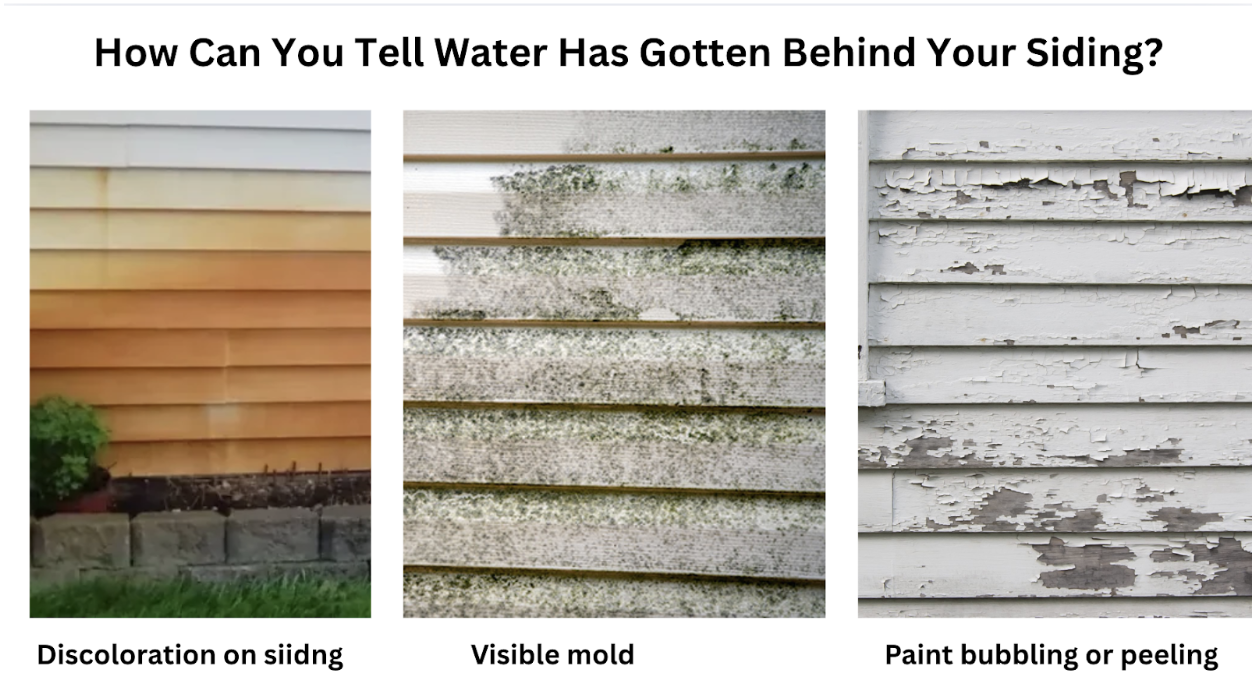
This is perhaps the most serious problem you can have with siding, and it’s surprisingly common in Indiana homes. Your siding’s main job is to keep water out. When it fails at this job, you’re looking at a situation that goes way beyond cosmetic damage.
Once water gets behind your siding, it doesn’t just sit there harmlessly. It soaks into your home’s structural components (the wood sheathing, wall studs, and insulation). In Indiana’s climate, this moisture undergoes freeze-thaw cycles all winter, which accelerate rot and structural damage.
The visible siding damage you can see is usually just the tip of the iceberg. By the time you notice water stains, bubbling paint on your interior walls, or mold growth, there’s often significant hidden damage that repair work can’t address.
Attempting to repair water-damaged siding without addressing the underlying moisture problem and structural damage is like putting a bandage on a broken bone; it might cover up the problem temporarily, but it doesn’t fix anything.
Look for these warning signs around your home:
During Indiana’s spring thaws, check for water stains that appear on interior walls — this is often when hidden moisture problems become visible.

You might not connect rising energy costs with your siding, but there’s often a direct relationship.
Siding isn’t just about looks; it’s a crucial part of your home’s insulation system. When siding fails, gaps and cracks allow air to escape in winter and enter in summer. Your HVAC system has to work overtime to compensate, and your energy bills reflect this extra effort.
This is especially noticeable in Indiana, where we experience temperature extremes in both summer and winter. If your heating bills have jumped in the last few winters, or your air conditioning seems to run constantly in summer, your siding might be the culprit.
Old or damaged siding can also allow moisture to compromise your wall insulation. Once insulation gets wet, it loses its R-value (insulating power) and becomes essentially useless. Repairing the exterior siding won’t restore your insulation’s effectiveness; you need a full replacement that addresses both issues.
If you’ve noticed drafts near exterior walls, ice damming on your roof in winter, or rooms that are always too hot or too cold, your siding’s insulating properties have likely failed. In these cases, replacement with modern, energy-efficient siding will actually pay for itself over time through lower utility bills.
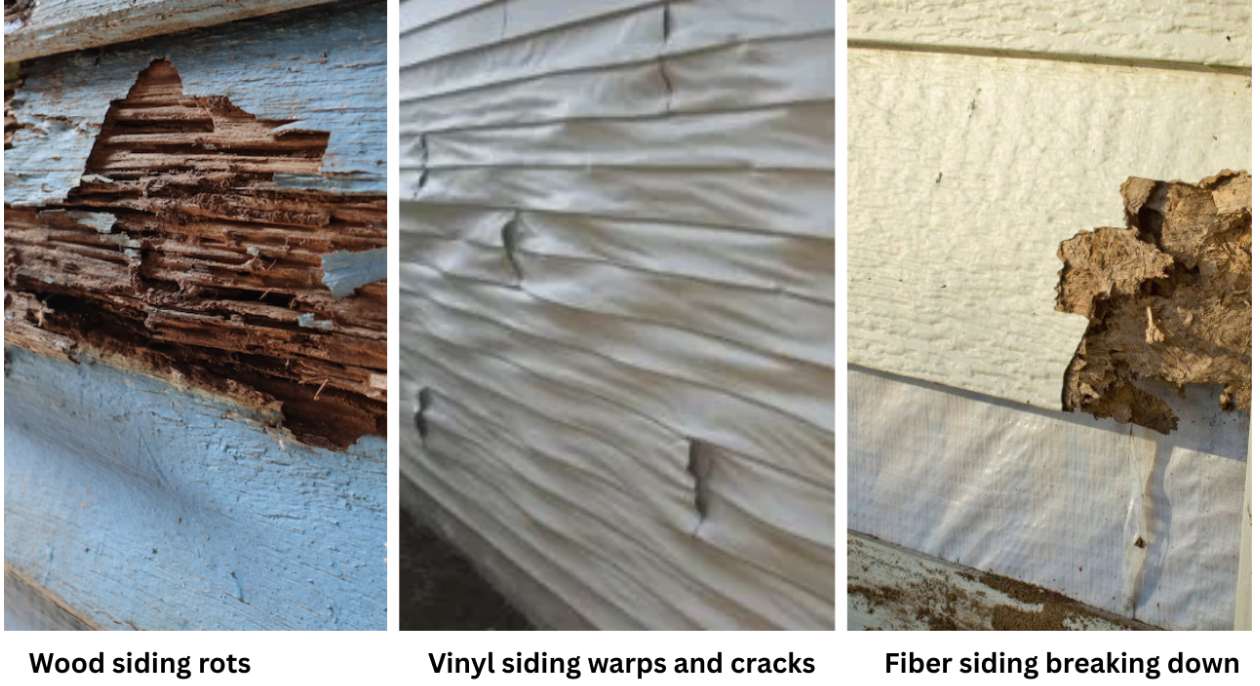
Different siding materials fail in different ways, but they all eventually wear out.
Indiana’s weather is particularly hard on siding materials. Our freeze-thaw cycles cause expansion and contraction that accelerates wear. Summer humidity promotes rot in wood siding. Severe thunderstorms and occasional hail cause impact damage that compounds over time.
When siding is warped, rotting, or crumbling, the material itself has broken down. You can’t repair rot back into solid wood, you can’t unbend warped vinyl, and you can’t restore strength to crumbling fiber cement. The only solution is replacement.
Age alone doesn’t automatically mean you need replacement, but it’s a major factor to consider when making your decision. Different siding materials have different expected lifespans, but they’re all affected by Indiana’s challenging climate:
These lifespans assume proper installation and regular maintenance. If your home doesn’t have adequate overhang protection, proper flashing, or has faced significant storm damage, the effective lifespan may be shorter.
If your siding is over 20 years old and you’re noticing problems, ask yourself: “Will I want to live with patched, mismatched repairs for the next 5-10 years, or would I rather have new, uniform siding that I won’t have to worry about?” For most Indiana homeowners, especially those planning to stay in their homes long-term, replacement provides better value and peace of mind.
Living in Indiana means your siding faces unique challenges that homeowners in milder climates don’t have to worry about. Our state experiences all four seasons intensely, which puts enormous stress on exterior materials.
Yes, siding can be repaired if the damage is small, localized, and cosmetic. Repairs work best when the siding is under 15 years old, matching materials are available, and there’s no water or structural damage. Widespread or moisture-related damage usually requires replacement.
If more than 30% of your siding is damaged, replacement is usually more cost-effective than repeated repairs. At that point, labor costs add up, matching becomes difficult, and other areas are likely to fail soon.
In most cases, yes. Water behind siding often causes hidden rot, mold, and insulation damage. Repairs only fix the surface; replacement allows contractors to address the underlying moisture problem and prevent future structural issues.
Yes. Cracked, warped, or loose siding allows air leaks and moisture intrusion, reducing insulation performance. In Indiana’s hot summers and cold winters, this often leads to higher heating and cooling costs.
Typical lifespans in Indiana:
Harsh weather and poor maintenance can shorten these ranges.
Is siding replacement covered by insurance?
Insurance may cover siding replacement only if damage is caused by a sudden event, such as hail or wind. Normal wear, aging, and rot are not covered. Proper inspection and documentation are key for claims.
Consider a repair if:
Consider a replacement if:
At Hoel Roofing, we’ve helped hundreds of Indiana homeowners work through this exact decision. We’ll inspect your home, show you exactly what we’re seeing, and give you honest recommendations about whether repair or replacement makes more sense for your situation.
We’re here to help you make the right decision for your home and budget. Sometimes that means a simple repair. Sometimes it means full replacement. We’ll explain the pros and cons of each approach and let you make an informed choice. Schedule A Siding Service Today!

Toyosi Ogunsola is the Content Manager at Hoel Roofing & Remodeling in Rushville, IN, where she oversees the creation of educational, trustworthy content about roofing, remodeling, and home improvement. With a master’s degree in Emerging Media Design and Development and a background spanning content strategy, UX research, and digital marketing, Toyosi combines data-driven insights with clear, engaging writing to help homeowners make informed decisions. Passionate about translating complex roofing topics into helpful resources, she works closely with Hoel’s team of roofing experts to ensure every piece of content is accurate, practical, and user-focused.