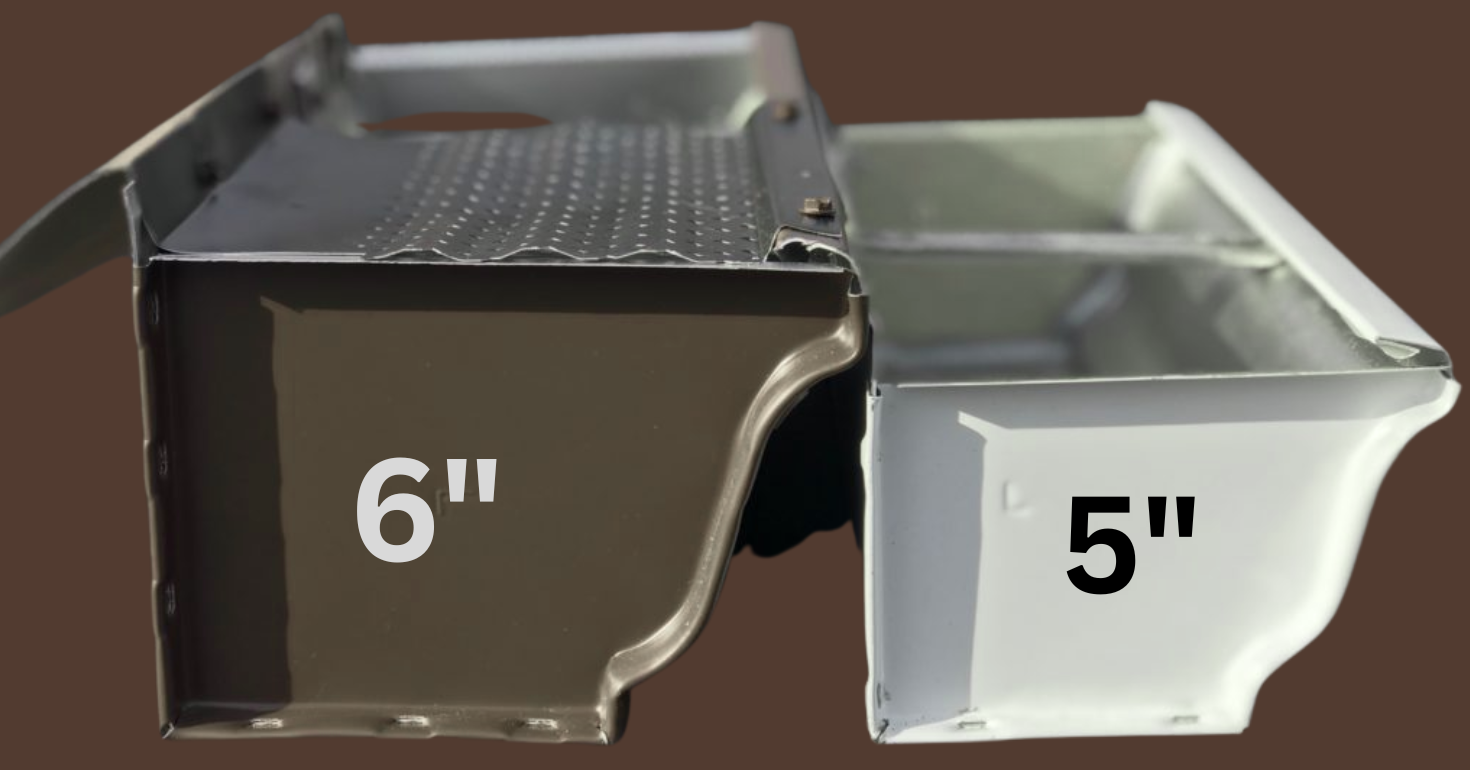
Do you see water spilling over the edge of your gutters, and wondering if you have the wrong size? If yes, you should read this.
At Hoel Roofing, we’ve installed 6-inch gutters on Indiana homes for nearly a decade and have seen many 5-inch gutters in the wild. We choose to install 6-inch gutters rather than 5-inch gutters, as 6-inch gutters offer the best protection against the weather in Indiana. We have seen how small sizing differences can lead to big performance changes, especially during the Midwest’s heavy storm seasons. In spite of this, we recognize they might not be the best fit for everyone, so we have compared both so homeowners can make the best decision.
In this article, we discuss what really sets 5-inch and 6-inch gutters apart: in water flow, cost, appearance, and performance, so that you can make the smartest choice for your home. By the end, you’ll know exactly which gutter size fits your roof, your budget, and your climate.
In simple terms, the number refers to the width across the top of the gutter trough. That extra inch in a 6-inch gutter might not sound like much, but it increases water capacity by nearly 40%. That added capacity helps prevent overflow during downpours, particularly on larger or steeper roofs where water runs off faster.
The wider your gutters, the more water they can carry away from your roof. A 5-inch gutter is typically paired with a 2×3-inch downspout, while a 6-inch gutter uses a 3×4-inch downspout, which drains water more quickly.
That’s why homeowners with large roof surfaces or steep pitches often benefit from wider gutters; they move more water, faster, before it can overflow.
In many cases, a 5-inch system is perfectly adequate, especially if you live in an area that doesn’t experience a lot of rainfall. However, if you live in areas with heavy rainfall (more than 0.3 inches per hour), a 6-inch system is the better choice, as its increased capacity allows the gutter to hold more water and prevent damage. For some homes, upgrading to 6-inch gutters makes all the difference in preventing water damage.
If your roof isn’t large or steep, 6-inch gutters might be overkill. They cost more and can look bulky on smaller homes. The right size depends on your roof’s square footage, slope, and number of downspouts.
| Gutter Size | Average Installed Cost per Linear Foot | Avg. Home (150 Linear Feet) | Best Use Case |
| 5-Inch | $8 – $10 | $1,200 – $1,500 | Standard rooflines |
| 6-Inch | $10 – $14 | $1,500 – $2,100 | Large or steep roofs |
That depends on your roof. If you’ve noticed overflow during storms, water pooling near the foundation, or staining on your siding, that upgrade is likely worth it. But if your gutters drain cleanly and your roof isn’t oversized, a 5-inch system will do just fine.

You might want to consider 6-inch gutters if:
If you see overflowing corners, erosion near your foundation, or fascia rot, your gutters likely aren’t draining fast enough, a clear sign your home could benefit from a larger system.
For most homes, 5-inch gutters are the standard size, and for good reason. They’re affordable, lightweight, and perfectly adequate for moderate roof sizes and slopes.
Just make sure:
Many homes with 5-inch gutters perform pretty well. Proper design and maintenance often matter more than size. With the right installation and slope, a 5-inch system will handle even strong Midwest rains.
| Feature | 5-Inch Gutters | 6-Inch Gutters |
| Cost | Lower | Higher |
| Water Capacity | Standard | 40% more |
| Appearance | Subtle | Bolder |
| Best For | Typical roofs | Large/steep roofs |
| Maintenance | Easier | Slightly heavier |
| Downspouts | 2×3” | 3×4” |
| Ice/Overflow Protection | Good | Better |
Do 6-inch gutters really prevent overflow?
Yes, they handle about 40% more water, which helps during storms or snowmelt.
Can I mix 5-inch and 6-inch gutters?
You can, but it’s not ideal. The transition points may cause uneven flow unless carefully designed.
Do larger gutters look bad on small homes?
Not necessarily. Seamless, color-matched gutters blend in well even on smaller facades.
Do bigger gutters need more maintenance?
Slightly because of higher water volume, but they clog less often when paired with 3×4 downspouts.
In Indiana, we face it all: snow, ice, and sudden downpours.
If your home is shaded or prone to ice dams, a 6-inch system can reduce water backup and icicle formation along eaves, a small upgrade that prevents costly repairs later.
At the end of the day, gutter size isn’t about what’s “bigger” or “better”, it’s about what’s right for your roof’s design. Another element of gutter design (and function) you should probably be thinking about is seamless or sectional gutters. If you’re trying to decide between those two options, check out our article on Seamless vs. Sectional Gutters – Which Is The Right Fit for Your Home?

Toyosi Ogunsola is the Content Manager at Hoel Roofing & Remodeling in Rushville, IN, where she oversees the creation of educational, trustworthy content about roofing, remodeling, and home improvement. With a master’s degree in Emerging Media Design and Development and a background spanning content strategy, UX research, and digital marketing, Toyosi combines data-driven insights with clear, engaging writing to help homeowners make informed decisions. Passionate about translating complex roofing topics into helpful resources, she works closely with Hoel’s team of roofing experts to ensure every piece of content is accurate, practical, and user-focused.