Ever wondered what happens if you just ignore your gutters? Do they have real-time consequences that can affect the health of your roof or not?
The truth is, your roof might look flawless, but if your gutters aren’t doing their job, water could already be destroying it from underneath.
At Hoel Roofing, we’ve seen hundreds of “roof problems” that were actually gutter problems in disguise. A misaligned downspout or a small clog can quietly eat away at your fascia, decking, and even foundation, all while you think your roof is holding up fine.
In this article, you’ll learn how gutters and roofs work together, how to recognize when something’s going wrong, and what you can do to prevent minor drainage issues from turning into a full-blown roof replacement.
Yes, and it happens more often than you think. Your gutters are designed to channel rainwater safely away from your roof and foundation. But when they fail, water pools under shingles, behind siding, and down fascia boards. Even a slight pitch issue or small seam gap, which makes the roof no longer angled correctly toward the downspout, can send water where it doesn’t belong. Over time, this leads to rot, leaks, and costly water damage that can spread through your home.
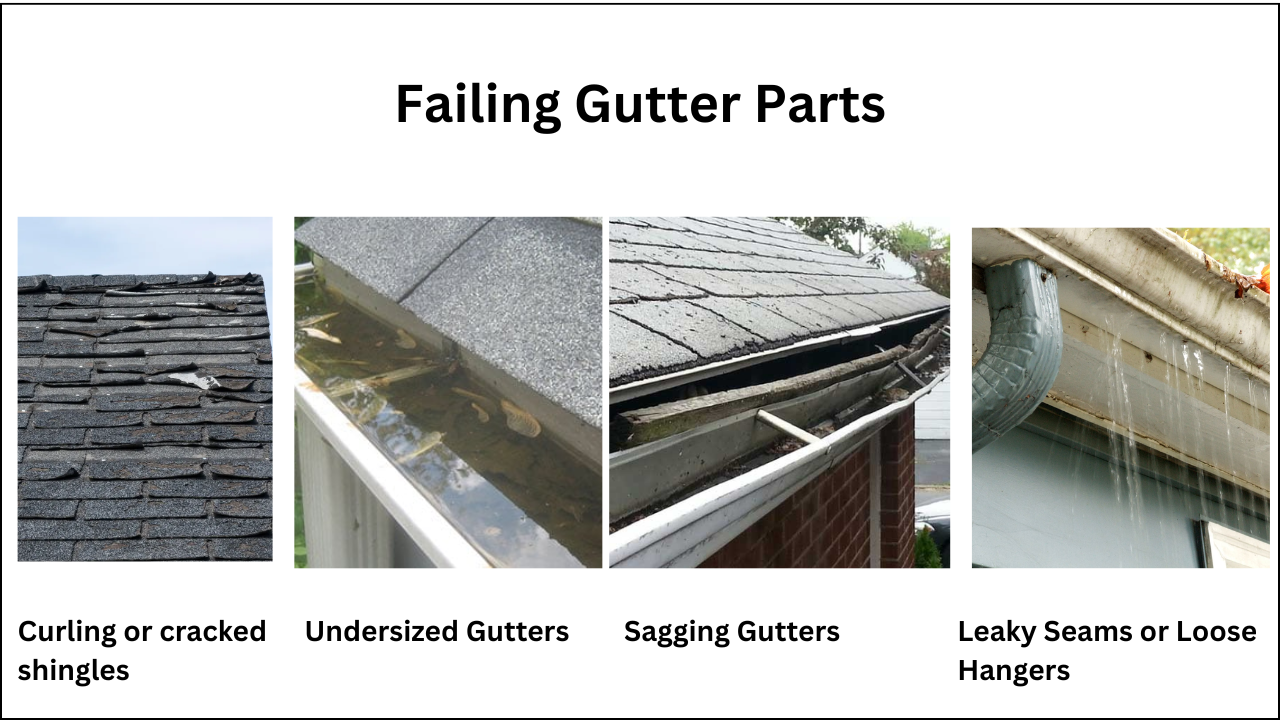
Your home’s gutter system is more than a trim detail; it’s an essential part of your roofing system. It helps to:
When that process breaks down, the roof itself becomes vulnerable. One weak section in your gutter system can cause a domino effect: wood rot, shingle damage, interior leaks, and foundation erosion.
Here’s what happens when key parts of your system start breaking down:
When leaves, twigs, or shingle granules clog your downspouts, rainwater can’t escape. Instead, it backs up and pools along the roofline, often sneaking under shingles. Over time, this trapped moisture causes the roof decking, the wooden layer beneath your shingles, to soften, rot, and grow mold.
You might not see this damage from the ground, but the signs show up later as leaks, ceiling stains, or a musty attic smell.
Every gutter needs a slight slope to keep water moving toward the downspouts. When gutters sag or lose their pitch, i.e, they are no longer angled correctly toward the downspouts, often from age or loose hangers, water collects and sits still.
That standing water soaks the fascia, the flat board that runs along your roof’s edge (usually where gutters attach). Once fascia wood begins to rot, gutters pull away even more, worsening the problem. Left untreated, this can spread rot to the eaves and rafters, which support your entire roof structure.
Many older homes in Indiana have 4 or 5-inch gutters that simply can’t handle heavier rainfall. During a downpour, water gushes over the edges, creating waterfalls that damage siding, flood landscaping, and erode foundations.
If you frequently notice gutters overflowing even when they’re not clogged by leaves, twigs, etc, that’s a sign your system is too small for your roof size or regional rainfall levels. Upgrading to 6-inch gutters or larger downspouts can make a big difference in preventing overflow and roof damage.
Traditional sectional gutters (gutters made from multiple pre-cut pieces, typically 10 to 20 feet long, that are joined together during installation to form a continuous gutter system) have seams where two pieces connect, and those joints are prime spots for leaks. Over time, sealant breaks down, screws loosen, and water begins to drip or run behind the gutter instead of through it.
That hidden moisture causes paint to peel, wood to rot, and even mold growth behind siding or fascia. Loose hangers can also cause the gutter to tilt, sending water in the wrong direction, right back toward your home.
You don’t always need a full replacement. Start with simple maintenance:
If your roof is steep or your gutters are two stories up, it’s best to call a pro. If you’re in East Central Indiana, we’re more than happy to clean, inspect, and make sure your gutters are working safely.
Can gutters really cause roof leaks?
Yes, when water backs up, it can seep under shingles and rot roof decking.
Do gutter guards help or hurt?
They help when installed properly and kept clean. Low-quality guards can actually trap debris.
What happens if gutters overflow?
Water will run down the siding, damage the fascia, and even flood your foundation.
Should I replace gutters when replacing my roof?
Usually, yes, it’s the perfect time to ensure both systems are aligned and properly sealed.
Here’s a quick homeowner checklist to spot early trouble:
Gutters aren’t accessories; they’re your roof’s first line of defense. When a repair is needed, and it is delayed, you risk not protecting your shingles, fascia, and even your home’s foundation. If you’re curious about whether you can delay a gutter repair or not, check our article on 5 Warning Signs Your Gutters Need Repair!

Toyosi Ogunsola is the Content Manager at Hoel Roofing & Remodeling in Rushville, IN, where she oversees the creation of educational, trustworthy content about roofing, remodeling, and home improvement. With a master’s degree in Emerging Media Design and Development and a background spanning content strategy, UX research, and digital marketing, Toyosi combines data-driven insights with clear, engaging writing to help homeowners make informed decisions. Passionate about translating complex roofing topics into helpful resources, she works closely with Hoel’s team of roofing experts to ensure every piece of content is accurate, practical, and user-focused.