Have you ever wondered if “50-year” or “30-year” shingles really last 50 or 30 years, or if it’s just clever marketing?
At Hoel Roofing & Remodeling, we’ve helped hundreds of Indiana homeowners make sense of confusing roofing warranties and choose materials that actually stand up to our unpredictable Midwest weather. With years of experience installing and inspecting everything from basic architectural shingles to premium impact-resistant systems, we know what lasts and what just sounds good on paper.
In this article, we’ll break down the real differences between 30-year and 50-year shingles, what those warranty numbers truly mean, how long each type lasts in Indiana’s climate, and what most roofers won’t tell you about warranties, maintenance, and long-term value.
By the end of this article, you’ll know how to choose the right shingle type for your home, budget, and future plans, and how to avoid overpaying for marketing terms that don’t always match real-world results.
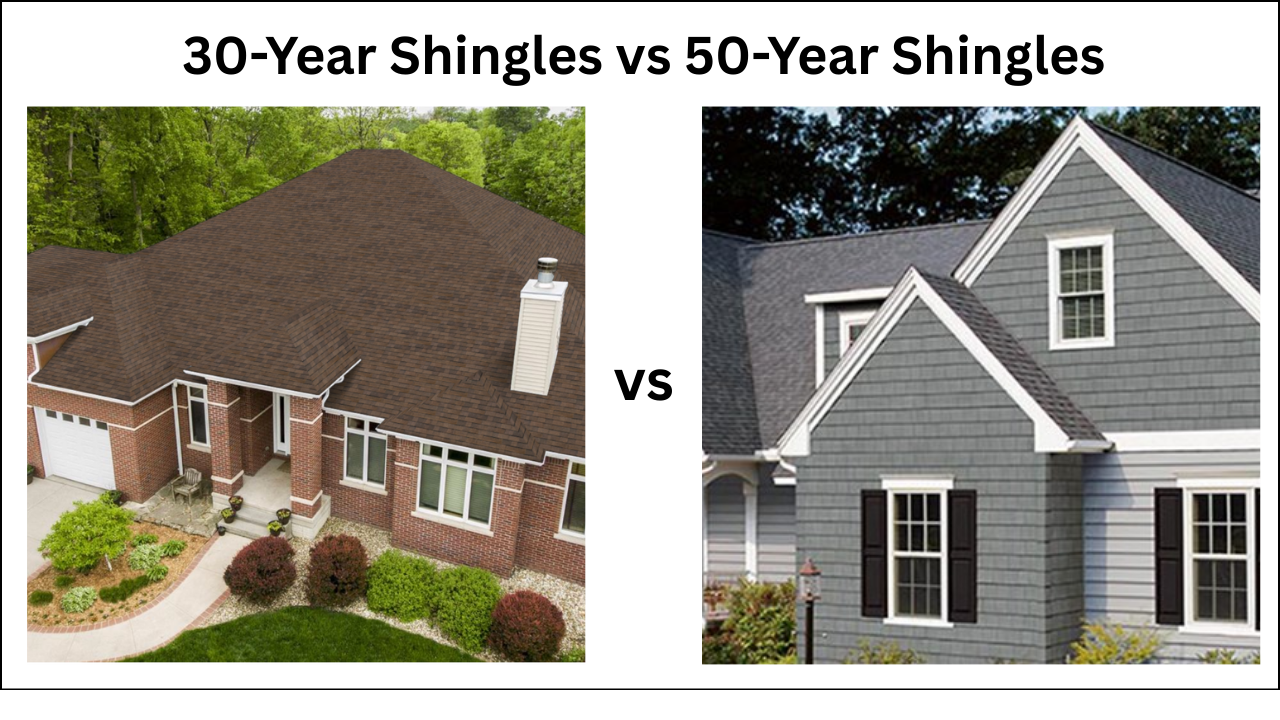
The numbers refer to manufacturer warranties, not the guaranteed lifespan of the shingles.
Here’s what most homeowners aren’t told:
That difference comes from the asphalt type:
Standard shingles use oxidized asphalt, which naturally dries out and becomes brittle over time. This means that while they may come with a “30-year” warranty, they’re more likely to show age-related cracking, granule loss, and wind damage well before the end of that timeframe, especially in Indiana’s freeze–thaw cycles.
Premium shingles like Malarkey Legacy or Owens Corning Duration FLEX, use SBS polymer-modified asphalt, a rubberized material that stays flexible for decades. That flexibility helps the shingle resist hail, high winds, and thermal expansion. Because of that, these shingles are truly built to perform closer to their “50-year” warranty claims, even in Indiana’s demanding weather.
Oxidized asphalt shingles: Match the lower end of a 30-year warranty, especially in harsh climates.
SBS polymer-modified shingles: Much more likely to deliver on a 40–50+ year warranty because the material holds up to impact and temperature swings.
In all, here’s what our team has learned working on thousands of roofs across Indiana:
The real difference between 30-year and 50-year shingles lies in the materials, thickness, and manufacturing process.
In central Indiana, where roofs face strong winds, hail, freeze-thaw cycles, and humid summers, the jump to a “50-year” shingle often means better resilience, but not necessarily double the lifespan.
The lifespan of 30-year & 50-year shingles depends less on the label and more on factors like:
Manufacturer warranties sound impressive, but they’re pro-rated. There are two types of warranties:
Here’s how it actually works:
Tip: A 50-year manufacturer warranty doesn’t cover improper installation or poor attic ventilation; those are the most common causes of early roof failure.
Regardless of the shingle rating, proper roof maintenance determines how long your roof really lasts. Here’s how to get the most out of either option:
With consistent upkeep, a 30-year roof can easily reach 25 years, while a 50-year roof can last 35+ in central Indiana.
Can 30-year shingles last 40 years?
Rarely. With perfect ventilation, installation, and mild weather, maybe, but most last 20–25 years in Indiana.
Are 50-year shingles really worth it?
If you plan to stay long-term or want a more resilient roof, yes — especially polymer-modified options.
Does a longer warranty mean better quality?
Not always. The asphalt formula and installation matter more than the number on the label.
What affects roof lifespan the most?
Poor ventilation, storm damage, improper nailing, and clogged gutters are the biggest culprits.
Choose 30-Year Shingles If:
Choose 50-Year Shingles If:
In most cases, a well-installed 30-year shingle will outperform a poorly installed 50-year one.
At Hoel Roofing & Remodeling, we’ve seen thousands of roofs across central Indiana, and here’s what our team has learned:
If you’d like to see how these shingles compare, check out our article Malarkey vs. Owens Corning vs. GAF Shingles: Which Roofing Brand Is Best for You?

Toyosi Ogunsola is the Content Manager at Hoel Roofing & Remodeling in Rushville, IN, where she oversees the creation of educational, trustworthy content about roofing, remodeling, and home improvement. With a master’s degree in Emerging Media Design and Development and a background spanning content strategy, UX research, and digital marketing, Toyosi combines data-driven insights with clear, engaging writing to help homeowners make informed decisions. Passionate about translating complex roofing topics into helpful resources, she works closely with Hoel’s team of roofing experts to ensure every piece of content is accurate, practical, and user-focused.