Have you ever noticed ice forming along your roofline in winter and wondered if your gutter guards are to blame?
At Hoel Roofing & Remodeling, we get this question from Indiana homeowners every year, especially after a heavy snow or sudden freeze. With years of experience repairing roofs, installing gutter systems, and preventing winter damage across Indiana, our team knows how to spot the difference between normal ice buildup and an actual ice dam problem.
In this article, we discuss what really causes ice dams, how gutter guards can sometimes make them worse, and, more importantly, how to prevent them in the first place.
By the end, you’ll understand how insulation, ventilation, and gutter design all work together to keep your roof clear and dry, no matter how cold it gets outside.
Not exactly. Gutter guards don’t cause ice dams by themselves. However, in particular winter conditions, poorly installed or unheated gutter guards can contribute to ice buildup along the roofline. The real problem usually lies deeper: trapped attic heat, poor insulation, and blocked drainage.
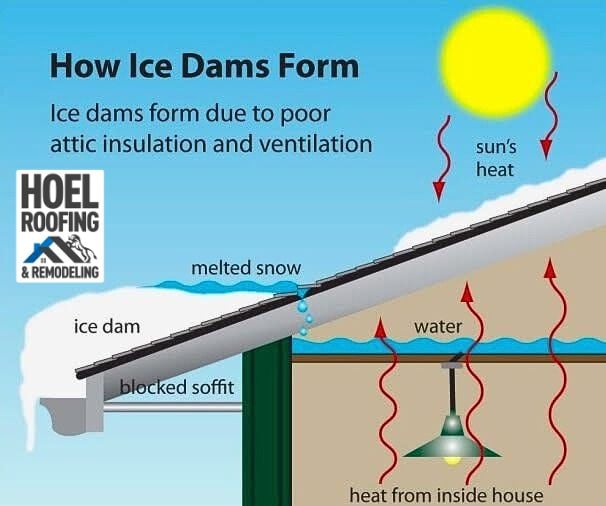
Ice dams form when heat escapes from your attic, warming the roof and melting snow unevenly. As that melted snow runs down to the colder gutter area, it refreezes, forming an ice ridge that traps water behind it. Over time, that water can leak into your attic or down your walls.
Even if you don’t have gutter guards, you can still get ice dams. The root issue is always roof heat imbalance, not the gutters themselves.

Gutter guards can slow down drainage in freezing weather, especially if snow or debris builds up. When melted snow refreezes on these guards, it can form a layer of ice that expands outward, resembling an ice dam.
Other instances are:
The key takeaway: it’s not the guard itself that causes ice; it’s the combination of guard design, roof conditions, and installation quality.
For cold climates like Indiana, perforated metal or heated surface-tension guards perform best. They allow water to drain and air to circulate, which helps reduce freezing at the gutter edge.
| Type | Winter Performance | Ice Risk | Maintenance |
| Micro-mesh | Moderate; can freeze at surface level | Medium | Low |
| Surface tension (helmet-style) | Good if heated | Medium–High | Low |
| Foam inserts | Poor; it absorbs moisture and freezes | High | High |
| Perforated metal | Good airflow and drainage | Low | Medium |
If you see these signs, call a professional. Breaking the ice yourself can damage shingles or gutters.
If you already have ice dams forming even with gutter guards installed, it’s a sign that heat is escaping through your roof or attic, causing snow to melt and refreeze at the edges. Gutter guards can slow ice buildup, but they don’t eliminate the problem entirely. Here’s what to do safely:
Even with quality gutter guards, prevention starts inside your attic. A quick insulation or ventilation upgrade can save you thousands in roof repairs later.

Here’s how to keep ice dams from forming in the first place:
If you’ve had ice dams before, it’s worth having your attic inspected. A roofing professional can identify ventilation or insulation gaps that aren’t obvious from the ground. Schedule a roof and attic inspection today. We’ll pinpoint what’s causing your ice dams and help you stop them before they start.

Toyosi Ogunsola is the Content Manager at Hoel Roofing & Remodeling in Rushville, IN, where she oversees the creation of educational, trustworthy content about roofing, remodeling, and home improvement. With a master’s degree in Emerging Media Design and Development and a background spanning content strategy, UX research, and digital marketing, Toyosi combines data-driven insights with clear, engaging writing to help homeowners make informed decisions. Passionate about translating complex roofing topics into helpful resources, she works closely with Hoel’s team of roofing experts to ensure every piece of content is accurate, practical, and user-focused.