Have you ever looked at your gutters and some of the repairs you have had to make and wondered if they were actually installed correctly? It’s a question many Indiana homeowners never think to ask until water starts spilling over, foundations crack, or roof leaks appear.
Here in Indiana, our climate requires gutters to work extra hard. Heavy spring rains, heavy snow, and frequent freeze–thaw cycles put strain on poorly installed systems. What might appear to be a slight misalignment in summer can become a major leak by winter. That’s why catching these signs early is especially important for Indiana homeowners.
At Hoel Roofing, we’ve spent the past 9 years fixing gutter systems across Indiana that weren’t installed correctly the first time. From sagging runs to downspouts in the wrong place, we’ve seen how a “cheap install” often costs families thousands in hidden repairs later. We believe that every homeowner deserves to have peace of mind and enjoy the investment their home represents. In this article, we discuss the seven most common signs that your gutters weren’t installed correctly, and how to spot them before they cause damage.
By the end of this article, you will be able to determine if your gutter is experiencing issues due to improper installation or not.
When it rains, gutters should quietly carry water away through the downspouts. If you see water spilling over the sides like a waterfall, something isn’t right. While clogs from leaves or debris are one cause, poor installation is another. Sometimes gutters are too small for the size of the roof, or they were installed without the correct slope to keep water moving.
Why it matters: When water constantly pours over the edges, it lands right at your foundation. Over time, that extra moisture can seep into basement walls, cause cracks in the foundation, and wash away landscaping. What starts as a nuisance can quickly turn into thousands of dollars in repairs.
Gutters should sit snugly against the edge of your roof (the fascia board). If you notice them sagging, bowing, or physically pulling away from the house, it’s a big warning sign. This usually happens when the wrong type of hangers (components that secure gutters to a building’s exterior so they can better hold the weight of the gutter and any water or debris it collects) were used, or the hangers were installed too far apart.
Why it matters: Loose gutters can’t do their job of catching and channeling rainwater. Instead, water runs down your siding or collects around your home. Worse, the extra weight of rainwater or snow in Indiana winters can rip the gutters away completely, damaging your roof and fascia in the process.
After a rainfall, your gutters should be empty once the storm passes. If you see water still sitting in them, it means they weren’t installed with the right slope. Gutters require a slight tilt, approximately ¼ inch every 10 feet, to direct water toward the downspouts. Without that tilt, water just sits there.
Why it matters: Standing water accelerates rust in metal gutters, attracts mosquitoes and pests, and adds extra weight that can cause the gutters to sag or detach. It’s like leaving a bucket of water hanging off your roof; eventually, something will give.
If you see brown streaks, dark patches, or mold growing on the siding or fascia (the vertical board that runs along the lower edge of the roof, covering the exposed ends of the trusses or rafters), it’s a sign that water is spilling where it shouldn’t. This usually happens when gutters are installed too flat, too far from the roof edge, or when seams aren’t sealed properly.
Why it matters: Moisture trapped against your siding or fascia doesn’t just stain; it creates the perfect environment for wood rot, pest entry, and even leaks inside your walls. What appears to be “just some streaks” could be the first indication of more severe water damage.
Older gutter systems often used spikes or nails to hold them in place. If you see nails sticking out or screws pulling loose, it means your gutters aren’t securely attached. Modern systems utilize hidden hangers, which are stronger and provide a cleaner look, but poor installation can still render them unstable.
Why it matters: Loose fasteners mean your gutters are hanging on by a thread. During a heavy rain or snowstorm, they can collapse completely, damaging your roofline, fascia boards, and even windows or siding as they fall.
The gutters themselves may look fine, but check where the downspouts end. Downspouts are the vertical pipes that carry water from your gutters down to the ground and away from your home’s foundation. If they stop right at your foundation and dump water there, it’s a sign of bad installation or shortcuts. Proper downspouts should direct water at least 5-10 feet away from your home, often with extensions or underground drains.
The gutters may look perfectly fine from the outside, but pay close attention to where the downspouts end. If they stop right at the base of your house and dump water directly onto the foundation, that’s a sign of a poor installation or a shortcut. This setup can lead to basement leaks, foundation cracking, soil erosion, and even siding decay over time.
Now, here’s the part most homeowners don’t realize:
Building experts recommend that downspouts should send water 5–10 feet away from the house. But most Indiana homes don’t actually follow this guideline. Many houses have downspouts that end just a few inches from the foundation, not because homeowners are doing something wrong, but because builders rarely add extensions unless the homeowner requests them.
As a result, a lot of people think short downspouts are “normal” when, in reality, they’re quietly causing long-term moisture problems.
Here’s what proper drainage should look like:
If you don’t see any of these at your home, upgrading your downspout extensions is one of the simplest, most affordable ways to protect your foundation and prevent water-related damage.
Why it matters: Water that drains right next to your house seeps into the soil and presses against your foundation; that pressure is a leading cause of basement leaks and concrete cracks. Spending a little to redirect water now can save thousands later.
Where gutter sections meet, like corners or connections to downspouts, you shouldn’t see dripping or leaking. If you do, it usually means the seams weren’t sealed correctly, or the installer rushed through with low-quality caulk. Over time, that caulking peels away, and water escapes through the gaps.
Why it matters: Even small leaks can cause big problems. Water dripping near windows, doors, or fascia boards soaks into the wood and invites rot, mold, and pests. What seems like a “tiny drip” now often leads to replacing siding, fascia, or even sections of your roof later.
Fixing a slope issue early might cost only a few hundred dollars. Ignoring it can lead to foundation repairs ($4,000–$10,000) or siding replacement ($7,000–$15,000). A complete roof replacement caused by water intrusion can exceed $25,000. That’s why spotting the signs of bad installation isn’t just about peace of mind; it’s about protecting your wallet.

Most gutter problems don’t start years later; they start on day one if the system is installed incorrectly. The easiest way to protect your home (and wallet) is to choose the right contractor from the beginning. Here’s how Indiana homeowners can set themselves up for success:
Before signing anything, ask for:
This protects you in case of accidents or property damage during the job. If a contractor hesitates to show proof, that’s a red flag.
Taking these steps helps you avoid cheap, rushed work that ends up costing thousands in repairs later. With the right installer, your gutter system should protect your home reliably for decades.
The best gutter materials won’t protect your home if they aren’t installed correctly. A proper installation ensures water flows safely away from your house every single time it rains.
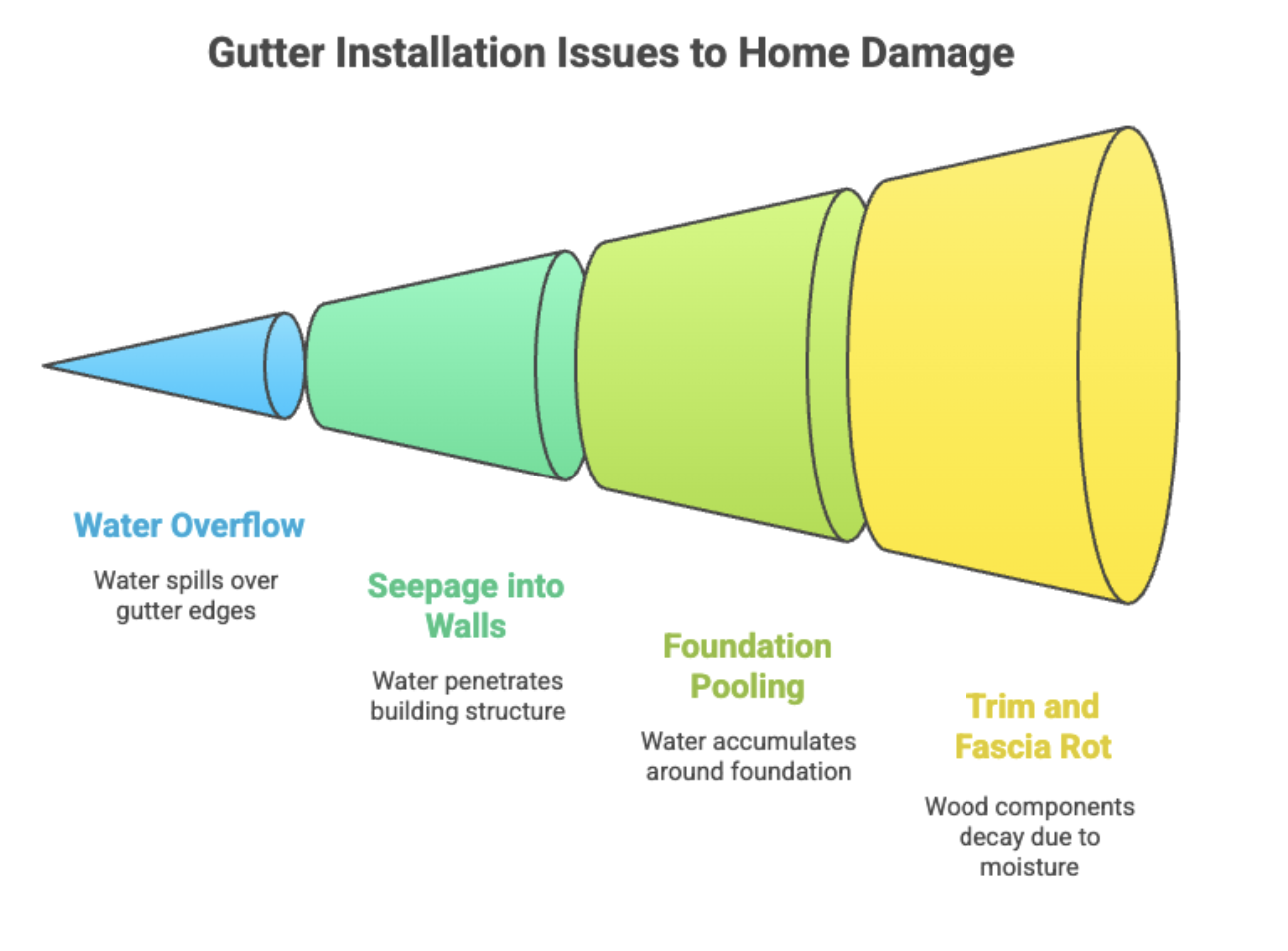
When gutters are installed incorrectly, water doesn’t flow where it should. Instead, it overflows, seeps into walls, pools around your foundation, or rots away trim and fascia boards. What starts as a “small drip” can snowball into foundation cracks, roof leaks, basement flooding, and thousands in repairs.
Don’t wait until you see damage inside your home. If you’ve noticed any of the warning signs above, or if you’re just not sure if your gutters were installed the right way, schedule a Free Gutter Inspection with our team.
We’ll inspect the slope, seams, downspouts, and overall system to ensure your gutters are functioning properly. And if there’s an issue, you’ll get a clear explanation of your options, no pressure, just honest answers.

Toyosi Ogunsola is the Content Manager at Hoel Roofing & Remodeling in Rushville, IN, where she oversees the creation of educational, trustworthy content about roofing, remodeling, and home improvement. With a master’s degree in Emerging Media Design and Development and a background spanning content strategy, UX research, and digital marketing, Toyosi combines data-driven insights with clear, engaging writing to help homeowners make informed decisions. Passionate about translating complex roofing topics into helpful resources, she works closely with Hoel’s team of roofing experts to ensure every piece of content is accurate, practical, and user-focused.